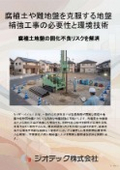
Ground reinforcement work | Achieving reduced environmental impact through humus soil and difficult ground measures.
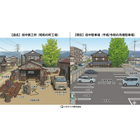
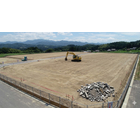
Ground reinforcement for humus soil and ultra-soft ground. Protecting the Earth and buildings by reducing leftover soil and CO2 emissions.
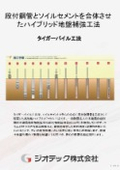
In soft ground and organic soil layers, it is essential to accurately address the risks of poor solidification and settlement due to soil conditions. Inadequate measures can lead to uneven settlement and structural failure. The Tiger Pile method is a hybrid technique that integrates soil-cement columns with high-adhesion stepped steel pipes. It reliably supports loads with the strength of the steel pipe core material, even in organic soil layers. By increasing load-bearing capacity, it shortens construction length, reduces the amount of cement solidification material used, and helps mitigate CO2 emissions during production. Additionally, significant reductions in excavated soil waste lower industrial waste disposal costs and environmental impact from transportation. GeoTech Co., Ltd. proposes sustainable reinforcement solutions that balance environmental considerations and economic efficiency while tackling challenging ground conditions.
basic information
The Tiger Pile method is designed to accommodate organic soil (humic soil) with specific design specifications. The soil cement column diameters are available in three sizes: φ400, φ500, and φ600 mm, with design strength optimized according to specifications and test results. The core material consists of stepped steel pipes (φ76.3 mm and φ114.3 mm) with controlled groove width and depth to achieve high adhesion effects, and the steel pipe lengths range from 0.5 to 8.0 m. By enhancing load-bearing capacity, this method reduces the construction length compared to traditional column improvement, significantly decreasing the amount of construction waste and cement usage, making it an environmentally friendly specification.
Price information
Delivery Time
Model number/Brand name
Ground reinforcement work
Applications/Examples of results
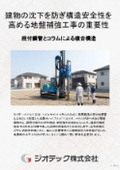
It is extremely effective for foundation reinforcement of single-family homes and small buildings on soft ground where cohesive soil layers, mud, and humus layers are thickly distributed. It is selected to ensure reliable vertical bearing capacity in sites where conventional ground improvement methods raise concerns about insufficient strength or quality deterioration. Furthermore, it is widely used in practical designs for urban narrow sites where there is a desire to minimize the amount of excavated soil generated during construction and in environmentally conscious projects that aim to minimize the burden on surrounding roads from material delivery vehicles.
catalog(4)
Download All Catalogs