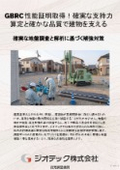
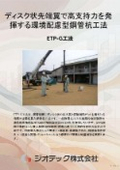
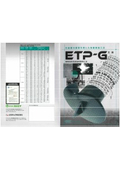
ETP-G Method | Ground Reinforcement with GBRC Performance Certification
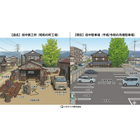
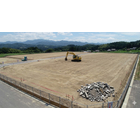
ETP-G method with GBRC performance certification. It robustly protects buildings through rational calculations based on SWS testing and ISO-compliant quality management.
To ensure the long-term safety of buildings, it is essential to select ground reinforcement methods that possess objective reliability. GeoTech's ETP-G method is a rotary-driven steel pipe pile method that has obtained a construction technology performance certification (GBRC Performance Certification No. 09-19) from the General Incorporated Foundation Japan Architectural Comprehensive Testing Institute. Based on ground investigation results such as SWS tests and SRS tests, it derives allowable vertical bearing capacity using clear calculation formulas, achieving a foundation design that is both safe and well-founded. Its unique structure, featuring a disc-shaped enlarged wing at the tip and an excavation assistance bit, balances high penetration capability with tip bearing capacity, providing strong support for small-scale buildings with three stories or less and a total floor area of 1,500 square meters or less, as well as retaining walls. The construction method, which does not use cement and generates no excavated soil, reduces environmental impact through low noise and low vibration. Additionally, under a quality management system compliant with ISO 9001, it ensures thorough internal control in the construction management technical department, site management by qualified personnel, and rigorous start-up inspections and quality checks, providing a high-precision construction system that prevents differential settlement.
basic information
The ETP-G method is equipped with reliable technical specifications that comply with performance certification from third-party organizations. The outer diameter of the shaft steel pipe ranges from φ89.1mm to φ216.3mm (a total of 7 types), with a wall thickness of 3.2mm to 12.7mm, and materials used include STK400 and STK490. The disc-shaped expansion wings at the tip come in 45 variations with diameters ranging from 223mm to 620mm (thicknesses of 12mm to 22mm, material SM490A, etc.). The applicable ground conditions are sandy soil (including gravelly soil) and clayey soil, and precise calculation formulas based on SWS test and SRS test results are applied. The maximum construction depth is 19.2m (less than 130 times the pile diameter).
Price information
Delivery Time
Model number/Brand name
Ground reinforcement work
Applications/Examples of results
This construction method is ideal for building projects that require public standards and reliable support strength evidence. It targets small-scale structures with up to three stories, a height of up to 13 meters, and a total floor area of up to 1,500 square meters (for single-story buildings, up to 3,000 square meters), as well as structures such as retaining walls, septic tanks, and billboards that are up to 3.5 meters high. Since it has obtained technical performance certification from public institutions (GBRC performance certification), the application for confirmation and technical explanations can proceed smoothly. Additionally, as a non-excavation, low-noise, and low-vibration rotary penetration method, it is widely used for ground reinforcement work in sites where excavated soil cannot be removed and in educational facilities and densely populated residential areas where environmental considerations are prioritized.
catalog(3)
Download All Catalogs