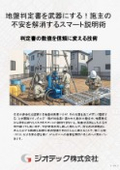
Soft Ground and Foundation Selection | Techniques for Gaining Client Trust through Settlement Correction Explanations
Utilizing the ground assessment report, smartly present the basis for determining foundation specifications. A practical guide to gaining the owner's deep understanding and trust through risk visualization.
A must-see for residential builders. This is practical know-how for smartly communicating the response to weak ground and the basis for selecting foundation specifications to clients. Based on Geotech's high-precision data, it breaks down the meaning of equivalent N values and soil composition, achieving anxiety relief and trust building. Even during additional improvements or specification changes, it supports smooth consensus formation through risk visualization with objective data. This is an essential guide for building trust that directly leads to improved proposal capabilities, increased contract rates, and prevention of differential settlement after handover.
basic information
This document is a guide that comprehensively covers how to interpret various survey data for soft ground assessment and the standard flow for selecting foundation specifications based on that data. It presents methods for reconfiguring specialized indicators such as equivalent N values, moisture content ratios, and soil classifications obtained from Swedish sounding tests (SWS tests) and hand auger surveys into tools for client explanations. Additionally, it includes explanations of estimated allowable stress, which serves as the boundary value for selecting direct foundations (slab foundations and strip foundations), as well as a practical checklist regarding the application conditions of ground warranty systems, making it useful across a wide range of activities from sales to design and construction management.
Price range
Delivery Time
Model number/Brand name
Boring survey
Applications/Examples of results
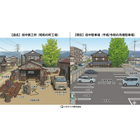
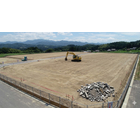
This can be used as a guideline for smartly explaining the ground risk and the rationale for foundation specifications to clients during sales scenes for custom-built homes and initial design meetings. It is particularly effective for follow-up discussions and dispelling distrust when reinforcement work is required in soft ground areas such as former rice fields or low-lying land, which leads to increased estimate amounts. Additionally, it is ideal as an educational text for sales representatives and young designers within the company, standardizing the skills for accurate interpretation of ground assessment reports and the ability to explain to clients, thereby contributing to improved customer satisfaction and expedited contract processes.