Site Investigation | Deep Support Capacity and Dynamic Analysis Ensuring DC Seismic Resistance
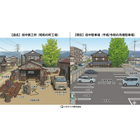
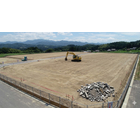
Deep drilling and viscous soil consolidation analysis clarify the liquefaction and settlement risks, ensuring seismic bearing capacity.
To achieve data center BCP in earthquake-prone countries, precise evaluation of dynamic ground behavior and deep foundation bearing capacity is essential. Geotech rigorously obtains the depth of the bearing layer, layer thickness, and continuous N-values through deep boring and standard penetration tests, visualizing the foundation bearing capacity that can withstand seismic forces. Furthermore, by identifying consolidation yield stress and overconsolidation ratio through laboratory loading consolidation tests using undisturbed samples of alluvial clay, we quantitatively simulate post-earthquake consolidation settlement and differential settlement risks. In addition, we measure the lateral deformation coefficient in situ through in-hole lateral loading tests (LLT) and conduct advanced seismic response analysis using our proprietary database "GEODAS." We demonstrate seismic safety from both shaking and settlement perspectives, robustly supporting the operation of data centers that run 24/7.
basic information
The basic specifications include a boring machine suitable for deep excavation and standard penetration tests (continuous N-value acquisition) in accordance with JIS standards. For cohesive soil layers, undisturbed sample collection (such as triple tube) will be conducted, and the consolidation yield stress Pc, compression index Cc, and overconsolidation ratio will be calculated using the JIS A 1217 staged loading consolidation test. Additionally, the horizontal loading test (LLT) will measure the lateral deformation coefficient E value of the ground from the applied water pressure and borehole wall displacement. All data will be analyzed in conjunction with our in-house ground information system GEODAS and delivered as a technical report specialized for seismic design and BCP evaluation.
Price information
Please contact us.
Delivery Time
Model number/Brand name
Ground investigation
Applications/Examples of results
It is optimal for the foundation design and BCP evaluation of ultra-high load structures that require high seismic resistance, such as data centers, disaster prevention base facilities, and AI infrastructure. It is used to verify the vertical and horizontal bearing capacity of pile foundations during major earthquakes, to understand the risk of differential settlement due to post-earthquake consolidation settlement and liquefaction, and for ground interaction analysis with seismic-resistant and vibration-isolated structures. Additionally, it can be widely utilized for advanced technical documentation for structural conformity assessments and building confirmation reviews, as well as for establishing ground safety evidence in large-scale business continuity plans.