Wooden structure demolition site Excessive improvement prevention Ground investigation and analysis service
By conducting precise ground bearing capacity measurements and soil classification, we eliminate excessive improvement costs for demolition sites and optimize the construction budget for wooden apartments.
This is a high-precision survey aimed at reducing unclear ground improvement costs at the site of a demolished wooden apartment, thereby optimizing the construction budget. At demolition sites, expensive piling and large-scale improvements based on excessive safety factors are often proposed, leading to cases where profitability is compromised. Our technology applies the SDS test (optional), which digitally measures rod rotation torque and friction in addition to the conventional SWS test, to scientifically identify soil properties. By avoiding being misled by apparent strength values, we precisely evaluate the settlement characteristics of sandy soil, clayey soil, and humus soil, eliminating the risk of excessive reinforcement. Furthermore, we incorporate the load diffusion mechanism from the foundation to the subsoil (damping effects at depths of 2m and 2-5m) into our analysis, providing rational foundation and ground reinforcement proposals limited to necessary locations and depths. This supports both cost reduction and safety, facilitating profitable apartment management.
basic information
This survey system is based on the Screw Weight Penetration Test (SWS test) and can incorporate the SDS testing machine as an option for soil classification to prevent excessive reinforcement. The SDS test automatically measures torque, load, and speed in real-time, calculating the characteristics of soil layers such as sandy soil, clayey soil, loam, and humus soil. The analysis system is equipped with the Inada-type equivalent N-value calculation formula (for clay: 3.0 × Wsw + 0.05 × Nsw, etc.), enabling quantitative assessment that eliminates ambiguity in settlement evaluation. Additionally, it standardly includes a load propagation calculation function that separates the evaluation of the direct influence range (2 meters below the foundation) and the reduction range (2 to 5 meters).
Price range
Delivery Time
Model number/Brand name
Boring survey
Applications/Examples of results
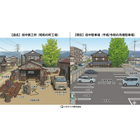
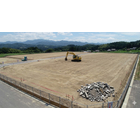
It is used in new construction projects primarily on the sites of demolished wooden apartments, where there is a desire to reduce excessive ground improvement costs and optimize construction expenses. In uneven ground where backfill soil and embankment soil are mixed after demolition, it is useful as a decision-making tool to avoid high-cost pile work that is uniformly applied at all points and to reinforce only the necessary areas. It serves as a cost reduction rationale document for apartment builders, real estate developers, and construction companies to explain the reasonableness of construction costs to clients. Additionally, it is widely used in projects that aim to verify the feasibility of adopting direct foundations (strip foundations and slab foundations) and maximize the cost-effectiveness of the entire construction.
catalog(3)
Download All Catalogs