Precise analysis of liquefaction and support layer inclination of riverside condominium development.
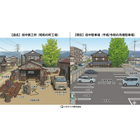
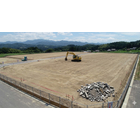
Thorough investigation of liquefaction and support layer inclination risks for riverside condominium developments! Geotech's ground survey leads to safe pile foundations through soil testing and structural analysis.
In areas near rivers and close to old riverbeds where condominium construction is planned, complex ground issues such as the liquefaction risk of loose alluvial sand layers, long-term consolidation settlement of soft alluvial clay layers, and steep inclines of supporting layers over short distances become apparent. Proceeding with foundation design based on insufficient evaluations can lead to reduced resistance to ground deformation during earthquakes and unnecessary increases in pile work due to excessive safety factor settings. Geotech conducts precise investigations utilizing standard penetration tests with N-value measurements every meter and undisturbed sample collection, along with laboratory tests such as uniaxial and triaxial compression tests and grain size analysis. The physical and mechanical constants of soil are organized into objective numerical values, allowing for high-precision calculations of liquefaction assessment using FL and PL values, as well as the reduction of ground reaction coefficients (β values). By directly linking the slope of supporting layers and ground deformation characteristics to structural calculations, we strongly support optimal pile foundation design that ensures structural safety while compressing excessive pile driving costs and reinforcement expenses.
basic information
A standard penetration test (JIS A 1219) using a boring machine will be conducted to measure the N value at 1-meter intervals and to collect undisturbed soil samples (undisturbed sampling). Indoor physical and mechanical tests (moist density, water content ratio, grain size, liquid and plastic limits, unconfined and triaxial compression, consolidation tests) will be performed on the collected samples in accordance with JIS/JGS standards to determine the fine particle content ratio Fc, cohesion c, and internal friction angle φ. Groundwater level measurements (dry digging and field permeability tests) will be conducted, and based on the horizontal acceleration for surface design, the liquefaction judgment index (FL value, PL value) and the reduction rate of horizontal ground reaction coefficient (β value) will be calculated and output.
Price information
Please contact us.
Delivery Time
Model number/Brand name
Ground investigation
Applications/Examples of results
It is used for the foundation ground evaluation of condominium buildings and large-scale RC and S structures constructed along riverbanks, coastal lowlands, old riverbeds, and alluvial plains. It is utilized for assessing liquefaction effects during earthquakes, examining the horizontal load capacity of piles, setting soil parameters necessary for seismic design, conducting consolidation settlement analysis in alluvial clay layers, and calculating optimal pile lengths considering the inclination of the supporting layer. Furthermore, it is introduced for attaching various soil data to structural calculation documents, preparing supporting materials for building confirmation applications and submissions to structural calculation conformity assessment organizations (designated assessment), and optimizing construction costs by reducing excessive pile lengths and numbers.
catalog(3)
Download All Catalogs