Soil investigation for residential land development on filled ground | Optimization of safety and cost
Eliminate excessive ground improvement. A precise assessment of settlement risk to maximize profit margins with optimal foundation design solutions.
We will eliminate the profit pressure caused by excessive ground improvement in residential properties built on filled land. Geotech accurately evaluates the ground unevenness unique to hilly and sloped areas and supports "optimal foundation design" to minimize the risk of differential settlement. We conduct comprehensive analyses based not only on simple N-value measurements but also on the years of development and thickness to assess shrinkage risks and the consolidation settlement characteristics of different soil types. By calculating the maximum settlement and deformation angles from data collected at multiple locations, we compare these with regulatory standards regarding the presence of self-settlement layers at depths of 2m and 5m beneath the foundation. Through precise calculations of allowable stress considering depth-specific load distribution, we ensure safety while minimizing the scale of reinforcement. This leads to a rational foundation design that directly improves cost performance.
basic information
The SWS (Swedish Weight Sounding) test is used as the standard, and data is collected at a total of five locations: the four corners and the center of the target site. The direct influence range up to 2 meters below the foundation and the reduced influence range up to 5 meters are separated to calculate the long-term allowable stress of the ground. In addition to the legal standards such as the Ministry of Land, Infrastructure, Transport and Tourism Notification No. 1113, a unique standard evaluating three items and eight elements related to the ground's "strength, shrinkage, and deformation" is applied. Taking into account the number of years since the embankment was constructed (from less than 1 year to over 15 years) and soil classification (such as loess and alluvial deposits), the possibility of differential settlement between each measurement point is assessed using a four-level ranking system.
Price range
Delivery Time
Model number/Brand name
Ground investigation
Applications/Examples of results
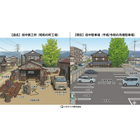
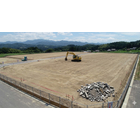
It is ideal for new residential land development in hilly and sloped areas, as well as for new ground surveys of built houses on sites that have previously been filled in, such as valleys and marshes. It meets the needs of home builders and contractors who want to prevent soaring construction costs due to excessive ground improvement work in uneven fill environments with a high risk of differential settlement accidents, while ensuring profit margins. Additionally, the high-precision data obtained and the optimized foundation design proposals are widely used as supporting documents for explaining ground safety to clients or as essential materials for passing inspections by ground warranty organizations.
catalog(3)
Download All Catalogs