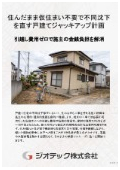
Residential Tilt and Settlement Correction i-LIFT Method | Geotech
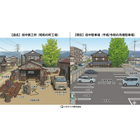
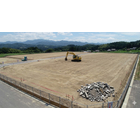
i-LIFT method for precisely lifting buildings from underground using grout injection.
The i-LIFT method involves injecting grout into the ground to restore tilted or sunken buildings while simultaneously improving their load-bearing capacity. This method consists of three "i (injection)" processes. First, repeated injections are made above the support layer to construct a "support plate." Next, a "lift plate" is formed beneath the foundation. After that, "lift-up injection" is performed between the two plates to precisely raise the entire building. Using laser measurement devices and computer-controlled three-dimensional tilt measurement equipment, the tilt is measured in real-time while fine-tuning the level, making it a high-precision and safe technology.
basic information
The grout used is primarily a chemically extremely stable quick-setting type of cement-based injection material, which has minimal dissipation during injection and maintains strength over the long term. The standard mix per 400L consists of 100L of sodium silicate No. 3, 100L of main agent liquid, 30kg of special hardener, 80kg of Portland cement, and 160L of water. It is supported by engineering evidence such as uniaxial compressive strength tests and volume change tests (maintaining 97.6% after 5 years) with 100% being the baseline before water immersion. It can be constructed using compact machinery, allowing for implementation in narrow spaces without being affected by weather, and it has excellent flexibility to be executed without restrictions on the foundation structure even when existing improved ground (such as the RES-P method) is present.
Price range
Delivery Time
Model number/Brand name
i-LIFT construction method
Applications/Examples of results
It is applied to correct the tilting and sinking of buildings due to insufficient bearing capacity of the ground caused by terrain and surrounding environment. Specifically, it addresses cases of uneven consolidation settlement due to the installation of basements and underground garages, the mixing of natural ground and backfill or insufficient consolidation of embankments, landslide terrain, and imbalances in ground bearing capacity due to underground construction in adjacent areas. Furthermore, it can also be applied to "settlement prevention and liquefaction prevention measures" for the ground. It has a wealth of application results as an approach to solve various risks of ground deformation, such as reinforcement of bearing capacity in weak ground (using a combination of inclined piles and group piles with small-diameter pipes by the RES-P method), prevention of consolidation settlement in embankment ground, and injection to prevent liquefaction during earthquakes in sandy layers.