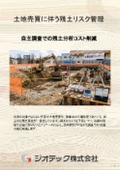
Soil Acceptance Standards | Risk Mitigation Survey for Land Transactions and Factory Operations
Preventing risks through the acceptance standards and compliance analysis of leftover soil from land sales and operating factories.
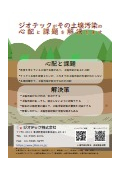
The demand for voluntary soil and residual soil investigations is expanding even for private land transactions and modifications or rebuilds of operating factories that are not subject to legal regulations. To avoid negative impacts on business plans that may arise from discovering contamination or exceeding standards at the time of sale, there is a need for proactive risk management and pre-compliance analysis in accordance with the Tokyo Metropolitan Environmental Protection Ordinance (such as notifications for modifications over 3000m2). Advanced sampling technologies, such as simplified mechanical boring (SCSC), are utilized to pinpoint extract all layers of soil without halting production lines in operating offices and factories, even on small plots of land. By ensuring prior compliance with landfill acceptance criteria and selecting optimal disposal sites, comprehensive avoidance of legacy risks such as asset value decline and unexpected costs is achieved.
basic information
Self-investigation and ordinance notification response package. Chemical analysis of more than 45 items, including dioxins, oil content, and fluorine, in addition to the national soil environmental standards (approximately 29 items). Construction method suitable for narrow sites: reliable all-layer soil core sampling up to a depth of 10.0m (depending on the strata) using a simple mechanical boring method (SCSC) with electric drive and zero exhaust emissions.
Price information
-
Price range
P3
Delivery Time
P4
Model number/Brand name
Soil survey
Applications/Examples of results
Voluntary assessment of residual soil and soil contamination risks associated with the closure or rebuilding of factories and business sites, and confirmation of compliance prior to land sale contracts. Preliminary sampling of generated soil in special environments such as indoors, low-ceiling eaves, and sloped areas within existing buildings, as well as notification responses based on environmental regulations of various municipalities (such as Tokyo).
catalog(3)
Download All Catalogs