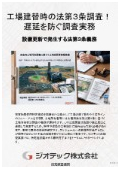
Investigation under Article 3 of the Law at the Time of Abolishing Specific Facilities | Practical Matters for Factory Reconstruction
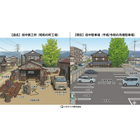
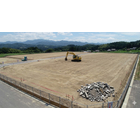
Comprehensive response to the Article 3 investigation during the abolition of hazardous substance facilities, from historical research to reporting. This will prevent delays in the process and promote a smooth reconstruction.
This document explains the practical aspects of conducting Article 3 investigations related to factory rebuilds and line upgrades that involve the abolition of specific facilities using harmful substances. We provide an efficient approach to minimize the impact on demolition and construction schedules and prevent delays. At Geotech, we first conduct a thorough Phase 1 historical investigation, examining drawings and public documents to assess the infiltration risks of specific harmful substances, categorizing them appropriately by risk level. In the subsequent sampling phase, we ensure the reliable execution of soil gas surveys for first-class substances and the collection of second and third-class substances, establishing numerical data based on official methods. Furthermore, we handle the entire process from the creation of high-quality administrative reports that eliminate the risk of re-investigation orders to submission to the governor. This is a practical solution to ensure compliance with the law and safely transition to the next construction project as planned.
basic information
This practical response service is a special specification for factory reconstruction that fully complies with the statutory investigation based on Article 3, Paragraph 1 of the Soil Contamination Countermeasures Act. In Phase 1, the historical investigation clarifies the underground infiltration risk of specific hazardous substances through the verification of public notification documents, past operational records, and construction history, and creates a classification plan based on the risk categories. In Phase 2, sampling calculates the optimal arrangement (10m or 30m grid) applicable for the exemption provisions of depth-limited investigations according to the maximum depth of physical alteration in the reconstruction area. It includes the measurement of leaching and content standards by a registered analytical institution based on the Measurement Act, strict supervision and written audits by a technical manager, and the preparation of regulatory format reports for submission to the prefectural governor.
Price information
Price range
P3
Delivery Time
P4
Model number/Brand name
Soil contamination survey
Applications/Examples of results
The main application scenarios involve responding to soil contamination surveys under Article 3 of the law in connection with the renewal, dismantling, and rebuilding plans of chemical plants and plating factories that had established facilities for the use of harmful substances, as well as various manufacturing lines. It is used to ensure and quickly complete the reporting obligation to the governor associated with the abolition of specified facilities within a limited period before the start of construction, in order to prevent delays in the overall development project. By incorporating legal omission provisions such as depth limitations into practice, it aims to optimize investigation costs while blocking future liability for defects and risks of damage claims, thereby facilitating the construction of a safe and reliable new factory through evidence building.
catalog(2)
Download All Catalogs