Designated Investigation Agency | Identifying Risks of Former Factory Sites through Land Use History
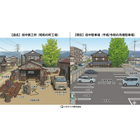
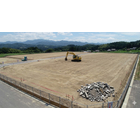
Support for the conversion of former factory sites into residential land. Analyze changes in land classification and mixed-use land risks, and reliably detect contamination through residential land sale sampling.
This is a practical guide detailing soil contamination risk detection methods based on land use history, targeting residential land conversion projects after factory closures. Even if the current status is residential land, it scrutinizes land use change histories other than forest and wasteland, visualizing the potential risks of specific hazardous substances due to heavy metals and volatile organic compounds. In particular, it focuses on the mixed land risks associated with temporary waste storage and drum can placement, explaining an advanced land history verification process through time-series aerial photographs and administrative records. It covers optimal placement design for residential land sale sampling in the early stages of development and the evidence-building procedures as a designated investigation agency by the Ministry of the Environment. It ensures the prevention of legal troubles such as hidden defects and damages after handover, reliably backing up safe residential land conversion and maximizing land asset value from a technical perspective.
basic information
This specification complies with the standard operating regulations of designated investigation agencies based on the Soil Contamination Countermeasures Act. It includes the complete extraction of land use change history from all registration data since the Taisho era, multi-layer analysis of old maps at a scale of 1:1000, and high-resolution aerial photographs spanning five different periods. In sampling surveys, specific hazardous substances of the first, second, and third categories are targeted, and the site is divided into unit sections of 10-meter grids, with gas sampling up to a depth of 1 meter and surface soil collection conducted using simplified boring techniques. All analyses are performed in-house at our laboratory based on official methods.
Price information
Price range
P3
Delivery Time
P4
Model number/Brand name
Geographical and historical survey
Applications/Examples of results
This technology is used for pre-risk assessment when changing the use of sites such as chemical plants, metal processing factories, and vehicle maintenance shops into residential areas or condominiums. Before concluding a land sale contract, it is optimal for practical work to trace the change of land use in the closed registration records to uncover past histories as mixed-use or industrial land, and to confirm the presence of contamination such as heavy metals remaining underground through sampling. This enables the complete elimination of defect risks in land acquisition for real estate developers, the establishment of environmental liabilities for landowners, and serves as a public proof of safety for residents after the land is repurposed, making it widely applicable in practical scenarios.
catalog(3)
Download All Catalogs