Designated Investigation Agency | Negotiation Techniques for Residential Land History to Mitigate Risks through Land Use History
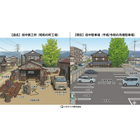
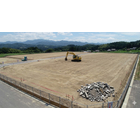
Preventing breakdowns in negotiations. Prior disclosure of mixed-use land risks and sampling of residential land transactions to prove underground safety.
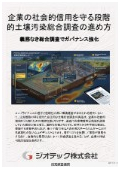
A strategic guide for sellers to take the lead in the sale of idle assets and factory sites. It traces the history of land category changes in the registry to prevent soil contamination issues before they arise. It details methods to objectively verify safety using aerial photographs and old maps against the risks of mixed-use land, which are also a concern outside of forests and wilderness. Additionally, it includes procedures for sampling residential land sales to alleviate buyer anxiety and expedite contracts, as well as know-how for building evidence through designated investigation agencies. A practical book that blocks post-transfer defect disputes and facilitates advantageous transactions.
basic information
This specification is a highly reliable standard for historical and soil analysis optimized for real estate sale disclosure. It includes a comprehensive extraction of past land category change history based on closed registration records, as well as digital analysis of land use conditions using aerial photographs from three different eras. In the sampling survey process, standard method sampling is conducted up to a depth of 1.0m at points where there are concerns about the risk of the presence of Type 1 specified hazardous substances (volatile organic compounds) and Type 2 specified hazardous substances (heavy metals). Based on strict accuracy management standards as a designated investigation agency by the Ministry of the Environment, rapid testing and analysis are carried out in our own laboratory.
Price information
Price range
P3
Delivery Time
P4
Model number/Brand name
Geological and historical survey
Applications/Examples of results
This survey is used for conducting seller-led pre-environmental due diligence when selling or transferring land assets such as factories, warehouses, and old company housing to external parties. Before negotiating the sale or concluding a contract, it is ideal for identifying potential risks from heavy metals and other contaminants arising from past mixed-use land through land use change tracking, and for presenting reliable data on underground safety to the buyer through sampling. This helps avoid transaction cancellations due to risk discovery just before the contract, prevents unjust discount demands, and mitigates the risk of disputes over defects after the transfer.
catalog(3)
Download All Catalogs