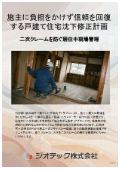
Single-family home jack-up construction plan | Restoring trust through settlement correction
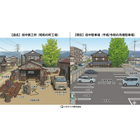
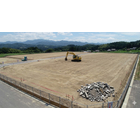
Correcting differential settlement in the shortest time while living in the property. A management guide for construction companies for occupied sites.
This document comprehensively covers the process management guidelines for correcting tilting issues after handover, ensuring zero relocation burden for the homeowner while they continue to reside in the property, and aiming for the shortest possible duration. Based on ground survey data, it optimally combines the use of existing columns, steel pipe jacking methods, and pressure slab methods to restore the entire building to a level state without distortion. It includes detailed illustrations of the process. Additionally, it contains a management checklist specific to occupied sites, addressing considerations for neighbors, selection of low-noise and low-vibration equipment, and dust prevention. It fully covers dialogue know-how to reduce homeowner stress and prevent secondary complaints, procedures for reattaching ground guarantees, and steps for insurance application. This is essential practical documentation for restoring builder trust and addressing warranty issues.
basic information
This document outlines the equipment configuration and construction management specifications that meet the quality standards of residential builders. It includes high-output hydraulic jacks capable of handling settlements exceeding 150 mm, a 3D laser measurement system that detects tilts in millimeter increments, and compact excavators that can access narrow sites. It also features the "Ganko Oyaji" carbon fiber sheet reinforcement method for beautifully repairing foundation cracks, specifications for lightweight, high-strength bubble mortar materials used in backfill, and a format for level measurement reports that demonstrate horizontal accuracy over the long term after construction.
Price range
Delivery Time
Model number/Brand name
Subsidance correction work
Applications/Examples of results
In the design and after-sales maintenance departments of house manufacturers and construction companies, it can be utilized for presenting differential settlement restoration plans to clients and formulating internal construction guidelines. It is ideal for situations that require balancing technical reliability and consideration for the client, such as fulfilling warranty obligations for defects within ten years, applying for renovation defect insurance, planning recovery work for construction defects, and reaching settlements or agreements with the builder. It is used to fully fulfill the company's technical responsibilities while protecting the daily lives of residents and resolving issues quickly and amicably.
catalog(4)
Download All Catalogs