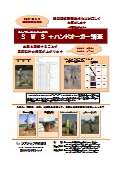
Geotech SWS + Hand Auger Ground Investigation
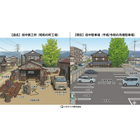
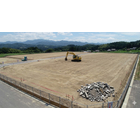
Soil investigation using SWS and hand auger to understand soil conditions and improve the accuracy of foundation design.
This is a ground investigation service that combines Swedish Weight Sounding (SWS) with hand auger boring for small-scale buildings. In addition to the SWS measurements, we verify the soil type directly beneath the foundation base. By integrating soil information such as clay, sandy soil, humus soil, and loam with SWS data, we significantly improve the accuracy of ground subsidence predictions. This supports appropriate foundation specification determinations and ensures reliable design for reinforcement work in weak ground conditions.
basic information
This is a specification provided by a geological survey company registered with the Minister of Land, Infrastructure, Transport and Tourism. In addition to obtaining data such as the converted N values by SWS, soil will be directly sampled to a depth of approximately 2 meters using a hand auger. The survey report submitted as a deliverable will include a ground assessment report and specialized considerations by a residential ground survey chief technician. Furthermore, detailed data covering soil quality, color tone, water content ratio, and columnar diagrams for each depth will be clearly stated, ensuring high technical reliability.
Price range
Delivery Time
Model number/Brand name
SWS + Hand Auger
Applications/Examples of results
It is used in response to the stricter building confirmation examination due to the revision of the Building Standards Act, as well as for determining the foundation specifications of small-scale buildings and designing ground reinforcement work. As an example of achievements, during the ground survey for the construction of a single-family house, the presence of fill up to GL-0.8m, the composition of the loam and clay layers beneath it, and the water content ratio (135%, 60%, etc.) were accurately identified. Based on this, it was determined that the ground had a stable tendency, and an optimal direct foundation specification, such as a flat foundation, was assessed.