Tiger Pile | Performance Certification Obtained | Geotech
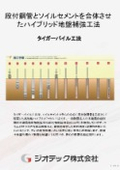
GBRC performance-certified stepped steel pipes and tiger piles. Achieving stable high load-bearing capacity and seismic resistance.
This is a deep mixing method using stepped steel pipes as core materials, which has obtained the Building Technical Performance Certification (GBRC Performance Certification No. 06-12 Revised 4). It combines the uniform material strength of steel pipe piles with the large frictional force of soil-cement columns, addressing issues such as strength variability and insufficient bearing capacity found in conventional methods. By suppressing stress concentration at the head due to the core material effect and supporting the load along the entire length, it significantly enhances resistance to bending and shear forces during earthquakes. Even if localized poor solidification occurs, the impact is minimized, ensuring reliable high bearing capacity.
basic information
The applicable ground range is a tip ground N' of 0.15$ and an average surrounding ground value of 0.6$. The soil cement columns have diameters of 400, 500, and 600 mm, with a design standard strength of 600 kN/m² (ranging from 600 to 1200 kN/m² during mixing tests). The number of blade cuts is more than 600 times/m for cohesive soil and more than 500 times/m for sandy soil. Ribbed (blade) stepped steel pipes manufactured by hot rolling (standard SGP-MD, diameters of 76.3, 114.3 mm, etc.) are used for the core material to enhance adhesion with the columns. The coefficient values for calculating bearing capacity are high, with a tip bearing capacity coefficient of 150 and a side friction coefficient of 13.9 specified. Compared to general construction methods, it boasts bearing capacity performance that is 2 to 4 times higher (at the tip and sides) depending on the conditions.
Price range
Delivery Time
Model number/Brand name
Tiger Pile
Applications/Examples of results
It can be applied to ground reinforcement measures for a wide range of buildings and structures. Even in humus soil where very weak ground and poor solidification due to organic matter are likely to occur, making conventional soil column design difficult, it enables reliable design and planning by considering the material strength of the core material (60-400 kN). When compared to general methods under the same ground conditions, the high load-bearing capacity significantly shortens the improvement length, allowing for a reduction in the amount of improved soil, solidification materials (cement-based solidifying agents), and generated residual soil to each be reduced to about one-fourth or less (design example: 27 columns, improved soil volume from 37.11 m³ to 8.97 m³, solidification material from 12t to 3.5t, residual soil from 7.4 m³ to 1.8 m³). This achieves shortened construction periods and reductions in CO2 and exhaust gas from construction equipment, demonstrating excellent economic and environmental performance.