Pure Pile Method | Ground Reinforcement Work [Performance Certification] | Geotech
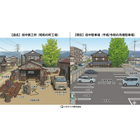
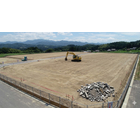
A reliable pile foundation reinforcement method for single-family homes that achieves high strength with zero dependence on soil quality.
The Pure Pile method for ground reinforcement in detached houses completely eliminates the influence of soil quality and provides stable high strength. A rod equipped with a conical excavation head compresses and excavates the original ground laterally, forming a pile-like column by replacing and filling it with cement milk. Since there is no mixing with the existing ground, the quality of the column is not affected by soil quality and consistently maintains high quality. Additionally, the elimination of the risk of soil clump contamination due to the conical head and the construction principle that does not loosen the ground ensures a stable large vertical bearing capacity.
basic information
This is a reliable specification backed by the Architectural Technical Performance Certification of the Japan Building Comprehensive Testing Institute (GBRC Performance Certification No. 11-28 Rev. 4). The design allowable bearing capacity is calculated as long-term Ra = 1/3·Ru and short-term Ra = 2/3·Ru, based on the strength index derived from SWS test results and calculated using formulas for sandy and clayey ground. The maximum construction depth is specified as 10m from the construction ground surface, with a design diameter of 0.2m and a tip cross-sectional area of 0.0314m². PP powder is added to the cement milk to minimize bleeding. In addition to straight rods, spiral rods are available for use in hard gravelly ground.
Price range
Delivery Time
Model number/Brand name
Pure pile method
Applications/Examples of results
It can adapt to sandy and clayey ground in both the surrounding and the advanced ground, including layers of humus soil where poor solidification is a concern (the friction of humus soil is not considered). The applicable range is for single-family homes and small buildings with up to 3 stories, a building height of 13 meters or less, and a total floor area of 1500 square meters or less (for single-story buildings, 3000 square meters or less). As a practical advantage, when using straight rods, there is no soil removal mechanism, so almost no residual soil is generated. Compared to conventional columnar improvement methods, it efficiently distributes and supports building loads with numerous small-diameter columns, ensuring high safety and enabling construction at a lower cost, thus providing reliable economic benefits and peace of mind.