Residential Ground Reinforcement | Cross Wing Column Method
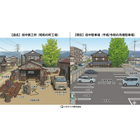
We enhance the safety of housing with a high-precision deep mixed processing method that has obtained GBRC performance certification.
In Japan, the risk of earthquakes is high, and ensuring the seismic resistance of buildings requires stable ground. Differential settlement due to soft ground and liquefaction poses a risk of building collapse. Our Cross Wing Column Method is a deep mixing treatment method that has obtained GBRC performance certification from the Japan Building Disaster Prevention Association. 【Application Scenarios】 - Ground improvement for new residential buildings - Ground reinforcement for seismic resistance enhancement - Construction on soft ground and areas at risk of liquefaction 【Benefits of Implementation】 - Reduced risk of differential settlement - Improved stability of buildings during earthquakes - Maintenance of long-term durability
basic information
【Features】 - A slurry-type mechanical stirring deep mixing method that has obtained GBRC performance certification. - Achieves stable stirring performance unaffected by soil type through a patented, uniquely developed mixing and stirring device. - Demonstrated high quality with a coefficient of variation of 25% or less across sandy soil, clayey soil, and loam. - Small quality control surcharge coefficient, suppressing excessive material usage. - By adopting "Inspection Method A" as a principle, rigorous quality inspections are conducted at minimal cost. 【Our Strengths】 Geotech provides "total ground services," offering a one-stop solution for all ground-related tasks, including ground surveys and reinforcement design/construction for new buildings, settlement correction work for existing buildings, and soil contamination investigations. With extensive experience and reliable technology, we create the future of cities from the ground up.
Price range
Delivery Time
Model number/Brand name
Cross Swing Column Method
Applications/Examples of results
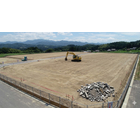
It is suitable for sandy soil, clayey soil, and loam as applicable ground, making it ideal for ground reinforcement measures for a wide variety of structures such as all buildings, retaining walls, and other constructions. It is widely adaptable to small-scale buildings that meet all the conditions of mid-rise buildings, iron towers, various constructions, as well as those with three stories or fewer above ground, a maximum height of 13 meters, a eave height of 9 meters or less, and a total floor area of 500 m² or less, as well as retaining walls of 3.5 meters or less in height. Depending on the site conditions, it is possible to select construction machinery (10-ton class, 15-ton class) and plants from small to large sizes, allowing for flexible construction results that are not affected by narrow sites or adjacent environments. Depending on the ground conditions, it is possible to propose a reduction in construction time and costs by supporting at a shallower depth than the support piles.