
news list
latest news
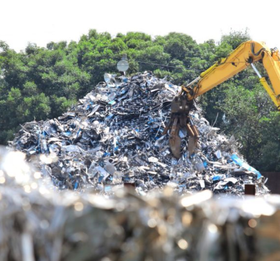
The "waste disposal and removal costs" of solar power plants have become a management issue. Before it becomes a one-option disposal situation, there are choices to convert the burden into assets through self-consumption and redesign.
The era has arrived where solar power generation facilities must be considered not only at the time of installation but also all the way to the "exit." Power plants and equipment will inevitably face …
31~33 item / All 33 items
-
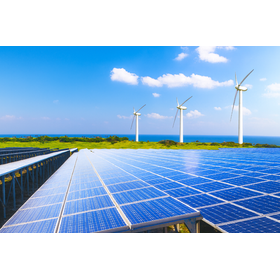
Understanding the 'Power Endurance Zone' in 3 Minutes: Summary of the 2024 Report
〇Purpose and Method of the Survey Chiba University’s Institute of Environmental Studies and Energy Policy conducts this survey annually (this is the 19th year). Based on renewable energy facilities that are operational by the end of March 2024, we estimate the amount of electricity generation and heat supply if they operate at full capacity for one year. 〇Trends and Key Points Wind Power as a Growth Engine The growth rate has surpassed that of solar power for two consecutive periods, leading the expansion of renewable energy electricity nationwide. Increase in Sustainable Power Zones Slows While the number continues to rise, the growth rate compared to the previous year shows a declining trend. Regional Disparities Become Clear In 24 prefectures, the ratio of renewable energy exceeds 30%. Five prefectures, including Akita, exceed 50%, leading the way. Renewable Heat Hits a Ceiling Due to being outside the FIT framework, it remains a modest increase of +1.4%. 〇What Has Become Clear Over 20% of municipalities have achieved "100% self-sufficiency in electricity": The introduction of renewable energy in rural areas is steadily progressing. Structure Favoring Wind Power: There is significant potential for growth in offshore projects and others in the future. Next Challenges are Heat and Urban Areas: While electricity has grown, improving heat utilization and self-sufficiency rates in densely populated areas is key. Expansion of Municipal Roles: There is a demand for region-led renewable energy plans, grid development, and local production for local consumption models.
-
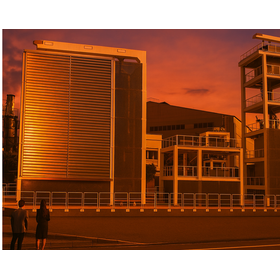
[Kawasaki Heavy Industries is constructing a "device that collects CO2 from the air" at its Kobe factory as part of its decarbonization efforts!]
Kawasaki Heavy Industries (headquartered in Minato-ku, Tokyo) has begun constructing new experimental equipment at its Kobe factory in Kobe City, Hyogo Prefecture, to "capture carbon dioxide (CO2) from the air." This equipment is scheduled to be completed in October 2025. The aim of this initiative is to efficiently collect not only the exhaust gases emitted from factories and power plants but also the very small amounts of CO2 present in the air around us. If successful, this technology is expected to help reduce CO2, which is a cause of global warming. CO2 Recovery from Factory Emissions At the Kobe factory, in addition to the DAC (Direct Air Capture) system for collecting CO2 from the air, they will also experiment with a method called PCC (Post-Combustion Capture) to capture CO2 from the exhaust of the gas engine power plant located within the factory. This method also applies KCC technology. Expectations for the Future This demonstration facility will be constructed on a larger scale based on experimental results from power plants in Japan and the United States. If successful, it is anticipated that larger facilities and applications around the world will follow in the future. Kawasaki Heavy Industries aims to contribute to the prevention of global warming with this new technology.
-
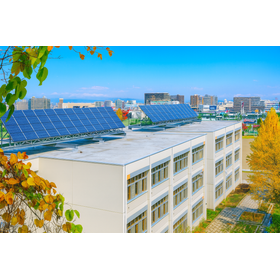
Osaka Prefecture × Hanwha Japan "Green Alliance" collaboration agreement project! Installing solar power generation systems in child welfare facilities and educational institutions within the prefecture.
On July 16, 2025, Osaka Prefecture and Hanwha Japan signed a partnership agreement under the SDGs partnership system "Green Alliance," marking the official launch of the installation of solar power generation systems in child welfare facilities and educational institutions within the prefecture. In this project, our company handles everything from design to construction in a unified system, achieving both rapid delivery and high quality. The facilities that adopt this system will consume approximately 120 MWh of renewable energy annually, significantly reducing electricity costs and enabling data provision for environmental education programs. [Background and Purpose of Implementation] Recently, the introduction of renewable energy in local governments is expected to play a role not only in reducing CO₂ emissions but also as an environmental education tool for the next generation. The "Green Alliance" promoted by Osaka Prefecture is a system that accelerates concrete efforts toward achieving the SDGs by fostering collaboration between businesses and government. In this partnership agreement, we aimed to combine the solar panels provided by Hanwha Japan with our construction know-how to implement the most suitable systems for child welfare and educational facilities in a short timeframe.