


Product Categories


Featured products
-

Industrial self-generated solar power construction [Cost reduction of 17% to 28% on electricity bills!]
-

Why can we reduce costs with self-consumption solar power generation now? *Explanatory materials available.
-

Up to 28% cost reduction with self-consumption solar power generation for semiconductor factories!
Products/Services(153items)
-
![[For municipalities] Solving disposal cost issues! The key to solar panel disposal problems is redesign.](https://image.www.ipros.com/public/product/image/2116788/IPROS3272791451107419660.png?w=280&h=280)
[For municipalities] Solving disposal cost issues! The key to solar panel disposal problems is redesign.
-
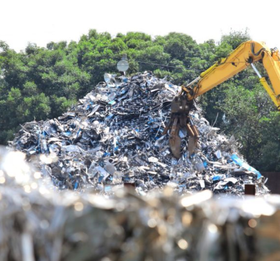
The key to solving the disposal cost issue of old solar panels for data centers is redesign.
-
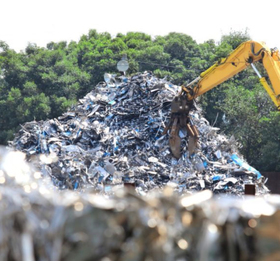
The key to solving the disposal cost issue of old solar panels for office buildings is redesign.
-
![[For Hospitals] The key to solving the disposal cost issue of old solar panels is redesign.](https://image.www.ipros.com/public/product/image/2116788/IPROS7090302811818171963.png?w=280&h=280)
[For Hospitals] The key to solving the disposal cost issue of old solar panels is redesign.
-
![[For Schools] The issue of disposal costs for old solar panels is key to redesign.](https://image.www.ipros.com/public/product/image/2116788/IPROS646488063134404298.png?w=280&h=280)
[For Schools] The issue of disposal costs for old solar panels is key to redesign.
-
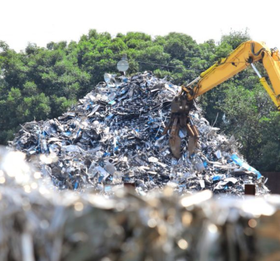
The key to solving the disposal cost issue of old solar panels for warehouses is redesign.
news list
-
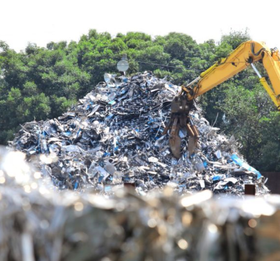
The "waste disposal and removal costs" of solar power plants have become a management issue. Before it becomes a one-option disposal situation, there are choices to convert the burden into assets through self-consumption and redesign.
The era has arrived where solar power generation facilities must be considered not only at the time of installation but also all the way to the "exit." Power plants and equipment will inevitably face the phase of removal and disposal in the future, but on-site concerns often lead to a mindset of "there's nothing left to do but dispose of it" and "disposal costs may rise even further," causing countermeasures to be postponed. In reality, the cost of removal and disposal has already become a significant item that cannot be ignored during the initial confirmation phase, and delaying it may significantly increase the burden of future lump-sum payments. However, the root cause lies in viewing the equipment solely as "an asset during power generation" and not being able to design for the entire lifecycle. Therefore, what is needed now is not a binary choice between disposal or extending the life, but a redesign that includes disposal, removal, and reuse, as well as self-consumption. Kenneth Energy Development has been involved in projects with a total construction cost of 908.4 billion yen, and has a track record of constructing 83 solar power plants over 12 years. Additionally, it has a wide range of implementation experience in self-consumption, industrial facilities, commercial facilities, and educational institutions, allowing for redesign proposals tailored to on-site conditions. Before leaving it unattended and only bearing disposal costs, it is necessary to consider transforming the challenges of removal into the next revenue opportunities.
-
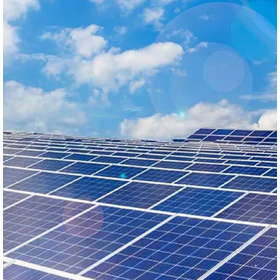
Don't leave corporate roofs, parking lots, and idle land as "costs": Utilizing self-consumption solar power to simultaneously reduce electricity costs and BCP risks.
The "fuel cost adjustment," which reflects fluctuations in fuel prices and exchange rates in electricity rates every month, hits management hard as it relies more on externally purchased electricity. Furthermore, in recent years, situations have arisen where demand and supply suddenly tighten due to overlapping factors such as extreme heat and equipment shutdowns, leading to warnings being issued. On the other hand, the roofs, parking lots, and unused land owned by companies are "sleeping assets" that only incur "maintenance costs for fixed assets" without generating profits. If left unaddressed, the risk of rising electricity costs and operational shutdowns during power outages will simultaneously increase, disrupting profit plans. The root cause is a single issue—an over-reliance on externally purchased electricity without utilizing idle assets. The solution is to create self-consumption solar power (plus storage batteries) to generate the necessary electricity on-site. For example, a system with a scale of 190.88 kW is expected to generate approximately 221,680 kWh annually, with an estimated reduction of about 96 tons of CO₂. We will transform idle assets into "investment assets for reducing electricity costs" through a seamless process from construction to subsidy application.
-
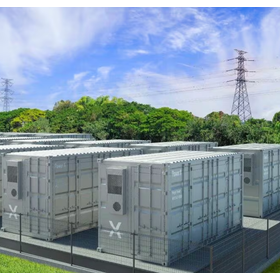
Battery × Subsidy = "Assetization" of power infrastructure. We will introduce numerous successful examples of self-consumption solar power combined with batteries that simultaneously solve rising electricity costs, BCP, and decarbonization.
In recent years, the soaring electricity prices, coupled with frequent natural disasters and power outage risks, have led many factories, warehouses, and stores to postpone considerations with the mindset of "we'll think about it someday." As a result, there have been numerous instances of operational halts and inventory losses during large-scale power outages, and many companies have faced annual cost increases of several million yen solely due to electricity expenses. However, the fundamental issue lies in a business model that ends with merely "buying electricity." The failure to utilize solar power and storage batteries as "company assets" by leveraging their own roofs and premises, along with the inability to fully utilize government and local subsidies, continues to generate increased costs and BCP (Business Continuity Planning) concerns. Currently, the generation cost of self-consumption solar power is expected to be less than 10 yen/kWh, and there are national subsidies (up to one-third) and high-rate local subsidies (between one-half to two-thirds) available for industrial solar power and storage batteries. Furthermore, our company has successfully established numerous self-consumption projects exceeding 100 kW and projects with storage batteries nationwide, achieving over 200,000 kWh in generation and electricity cost reductions annually. "Storage batteries × subsidies = assets, cost reduction, environmental conservation, BCP." The longer you wait, the more electricity costs and opportunity losses will grow. First, please check your company's dedicated investment recovery simulation based on your own roof and electricity bill details.
-
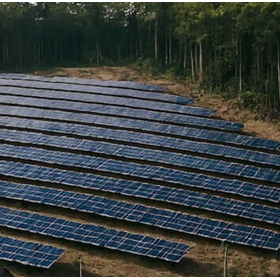
Concerns over 'foreign-made panels covering Japan' - Domestic technology for 'self-consumption solar power' rapidly emerges in the review of renewable energy policies.
The government's renewable energy policy is reaching a turning point. As Mr. Takai expressed concern that "foreign-made panels will cover Japan's land," energy "security" is entering a new phase. Relying heavily on the large-scale introduction of overseas panels has led to issues such as forest development and waste disposal. If the review continues to be delayed, it has been pointed out that there is a possibility of over 100 million used panels remaining in the country after 2030. The root cause is "excessive dependence on a low-cost imported electricity structure." To build a truly sustainable renewable energy policy, it is essential to shift to a "locally produced and consumed" energy model. Kenneth Energy Development Co., Ltd.'s self-consumption solar power generation system is committed to domestic equipment, domestic design, and domestic construction, boasting over 8,000 installations nationwide. Companies that have adopted this system have achieved an average reduction of 28% in electricity costs and a significant reduction in CO₂ emissions simultaneously. Now, with the review of renewable energy policies, the ability to generate power in-house is becoming a new competitive advantage for businesses.
-
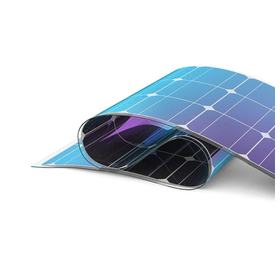
Renewable energy stocks surge in the 'High City Trade'! The next-generation 'perovskite solar cells' open a new era of domestic power generation.
"Perovskite solar cells" are once again emerging at the center of Japan's renewable energy policy. Mr. Takai has proposed "nurturing domestic technology for renewable energy" as part of energy and industrial policy, causing related stocks to attract attention in the market as the "Takai trade." The background to this is Japan's long-standing dependence on foreign-made panels in its renewable energy structure. While inexpensive imports have supported proliferation, they have also left a "negative legacy" of forest development, disposal risks, and price fluctuations. If this continues, both the land and energy supply will be controlled by foreign entities—this sense of crisis is the trigger for policy change. Perovskite solar cells possess the trifecta of being lightweight, highly efficient, and low-cost, making installation in existing buildings easy. Development is progressing as a domestic technology, and it is expected to become a mainstay for self-consumption power generation in the future. Kenneth Energy Development Co., Ltd. is developing a "next-generation self-consumption solar power system" with an eye on these perovskite cells. With over 8,000 installations nationwide and expertise in subsidy support, they are turning companies' "energy independence" into reality.

Aboutケネスエネルギー開発
We provide extensive support in solar power generation-related businesses and real estate-related businesses.
Kenneth Energy Development Co., Ltd. is a company aiming to promote renewable energy, operating in the following three main areas: 〇 Energy development business centered on solar power generation - Comprehensive support from planning, design, construction, to operation of rooftop and ground-mounted solar power plants - Assistance with connection negotiations with power companies and various permit applications, ensuring a smooth introduction even for first-timers 〇 Electrical equipment construction business - Handling a wide variety of electrical work, including new construction and renovation of commercial facilities and apartments - Broad coverage of all equipment, including lighting, air conditioning, emergency power supply, water supply and drainage, and gas piping 〇 Real estate and construction support business - Involved in infrastructure development and project support related to construction, leveraging a comprehensive construction system as a strength Additionally, many qualified professionals, such as electrical chief engineers and construction management engineers, are on staff, providing strong support for companies in their decarbonization efforts and cost reduction with high technical skills and reliable responsiveness. In the solar power-related business and real estate-related business, we can provide a wide range of support from project sourcing and investigation stages to execution stages such as EPC, tailored to your needs.