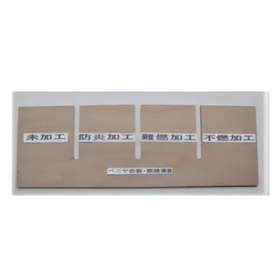
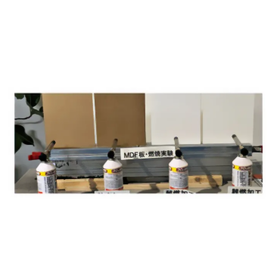
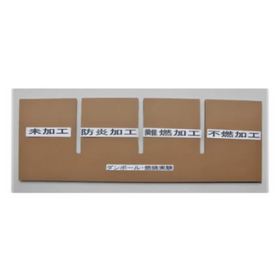
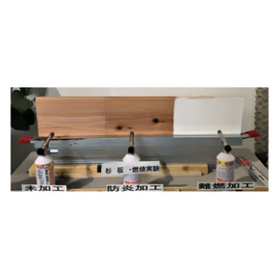
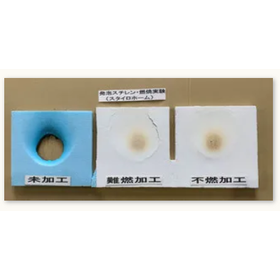
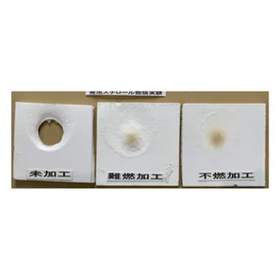
[Combustion Experiment] Styrofoam
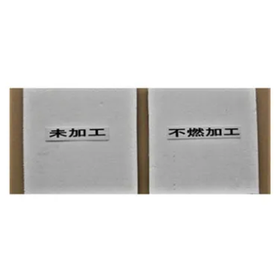
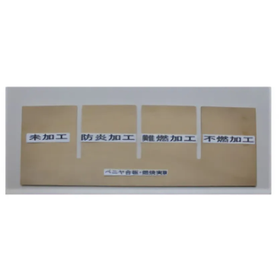
We aim to achieve flame retardant, quasi-noncombustible, and noncombustible effects simply by applying it to any material!
We would like to introduce a case study of a combustion experiment conducted using "expanded polystyrene." All combustion test specimens were processed using a spraying robot. The burner used for the combustion experiment has a flame temperature of approximately 1,300°C. The chemicals used include the flame retardant "KS Fire Guard" and the non-combustible water-based paint "KS Retardant." 【Case Overview】 ■ Combustion test specimens: All processed using a spraying robot ■ Burner used for combustion experiment: Flame temperature of approximately 1,300°C ■ Chemicals used: - Flame retardant "KS Fire Guard" (registered with the Japan Flame Retardant Association) - Non-combustible water-based paint "KS Retardant" *For more details, please refer to the related links or feel free to contact us.
basic information
For more details, please refer to the related links or feel free to contact us.
Price range
Delivery Time
Applications/Examples of results
For more details, please refer to the related links or feel free to contact us.
Distributors

Our company manufactures and sells various flame retardants, non-combustible water-based paints, and glow-in-the-dark water-based paints. We also offer flame retardant processing using robots. We have been involved in the manufacturing and sales of flame retardant agents and paints for over 20 years, and through our extensive experience, we can provide flame retardant and non-combustible effects on a wide variety of materials. Our non-combustible water-based paint is versatile and adheres to various resins (such as PP, PVC, PET, acrylic, FRP, etc.) while exhibiting flame retardant effects. Depending on the target material, we can also achieve non-combustible and quasi-non-combustible effects. We can also undertake projects to make entire shrines and temples flame retardant.