

All products and services
1~30 item / All 110 items
-
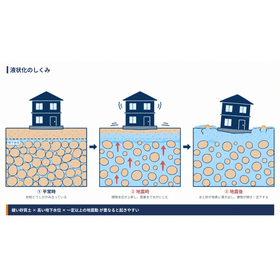
[Column] The Option of "Solidifying" for Liquefaction Countermeasures — El Niño Method
If the liquefaction assessment indicates that "measures are necessary," the next step is to choose a construction method. We will organize the three concepts of compaction, drainage, and solidification, and introduce the "solidification" approach.
last updated
-
[Column] How to Prove the Quality of Ground Improvement? Three Stages of Quality Control
The quality of ground improvement that is not visible to the eye after construction. This introduces the concept of minimizing the discrepancy between test results and on-site strength through three stages of verification: before, during, and after construction.
last updated
-
[Column] Key Points for Selecting Solidification Materials that Balance Hexavalent Chromium Countermeasures and Costs
The leaching of hexavalent chromium, which is a concern with cement-based solidifying agents. Preparedness for environmental risks and cost control can be achieved through ingenuity in the design phase.
last updated
-
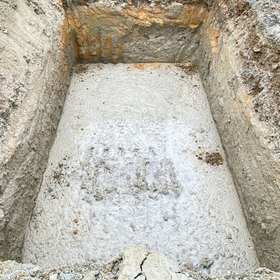
[Column] The "Uniformity Under the Foundation" Created by a Consistent System and the Stability of Buildings
The stability of a building is a value that reveals differences over time after completion. This explains how to consistently maintain the "uniformity beneath the foundation," which fundamentally influences it.
last updated
-
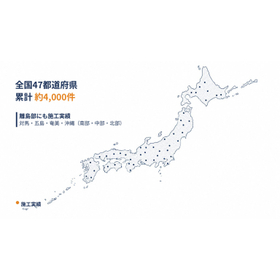
[Column] About 30% have a design strength of 400 kN/m2 or more. Latest construction trends.
When aggregating approximately 4,000 construction records nationwide, it shows that high strength and large-scale developments are progressing. This explains the latest trends in ground improvement needs for structural designers.
last updated
-

[Column] Case Study | Shortening Construction Time by Switching from Rappuru Concrete Method
In Kyushu, a certain public building (school) solved construction period issues by switching to the El Niño method. This is a case that achieved a shortened construction period, reduced leftover soil, and provided surface reinforcement.
last updated
-
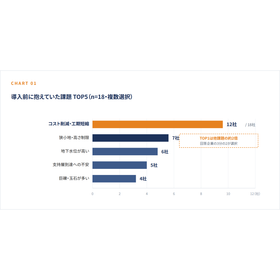
[Column] Three Reasons Why the Elniido Method is Chosen, as Seen Through Customer Feedback
In a survey of 18 companies that implemented the system, the average satisfaction rating was 4.39/5. We introduce the reasons for being chosen, such as balancing costs and timelines, and the ability to handle challenging conditions, through actual feedback.
last updated
-

[Free Offer] Elneed Method_Ground Knowledge Collection
Systematize construction method comparison, quality, and response to difficult conditions in 11 columns. Compile decision-making materials for design and construction into one book.
last updated
-
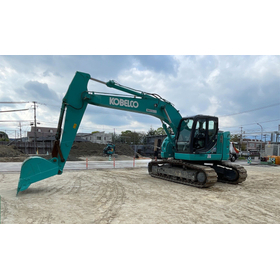
[Column] The Appeal of the El Niño Method for Pebbles and Boulders on Solid Bedrock
How to absorb risks that are not visible in preliminary surveys through design, such as point-embedded boulders, rolling stones, and solid bedrock?
last updated
-
[Column] A Must-See for Structural Designers! A Thorough Cost Comparison with Columnar Improvement Methods
A must-see for structural design professionals! A thorough cost comparison with columnar improvement methods.
last updated
-

Collection of Construction Achievements under Five Difficult Conditions | Elneed Method
Selected for sites where other methods have been rejected. Approximately 4,000 cases of challenging construction achievements disclosed.
last updated
-
[Column] The Problem-Solving Power of the El Niño Method to Avoid Construction Inability on "Vacant Land"
Introducing the capabilities of the Elniido method that overcomes the muddy ground of "vacant land."
last updated
-
[Column] Over 3,000 Achievements: Reasons Why the Elneed Method is Chosen
Over 3,000 pieces of data prove the effectiveness of the Elniido method. From RC construction and high-rise projects to challenging job sites, the numbers tell the "reasons for continued selection."
last updated
-
[Column] Thorough Comparison of 3 Methods / Column Improvement, RAPL, Elneed
Even with the same ground and the same building, differences in construction methods can change the size of the foundation. Variations in bearing capacity dramatically affect costs and construction time.
last updated
-

From liquefaction to seismic stress. A checklist of 26 items to prevent design errors.
The "safety confirmation" of ground improvement design is completed in this one book. It thoroughly covers often overlooked examination items, such as liquefaction considerations and maximum ground pressure during earthquakes, with a comprehensive checklist.
last updated
-

Essential for Designers: 8 Selected Formulas and Design Flowchart/Checklist
Achieving zero omissions in design. A design and construction manual that includes a comprehensive "workflow" covering the procedures for ground improvement and features "8 key calculation formulas" for practical use.
last updated
-

[Must-See for Designers] Design Guidelines Covering Calculation Formulas for Bearing Capacity and Settlement Amount
[Must-See for Designers] Design Guidelines Covering Calculation Formulas for Support Force and Settlement Amount
last updated
-

Publication of achievements in narrow land, sloped land, and public works! List of construction sites.
Publication of achievements in narrow land, sloped land, and public works! List of construction sites.
last updated
-

Compatible with sandy soil at 1000 kN/m². A true method that overcomes narrow sites, large boulders, and groundwater.
Maximum support capacity of 1000 kN. A joint development method by the Ministry of Land, Infrastructure, Transport and Tourism that overcomes high groundwater levels and boulder-laden ground. Technical basis usable for design selection flow and appropriate judgment is disclosed.
last updated
-

[Joint Development with the Ministry of Land, Infrastructure, Transport and Tourism] Ground improvement with a site strength ratio of 1.0 or higher! Support layers visible.
Eliminating the "invisible" concerns of column improvement. Achieving both direct visual inspection of the support layer and a field strength ratio of 1.0 or higher. Comprehensive comparison table with conventional methods and design standard strengths.
last updated
-
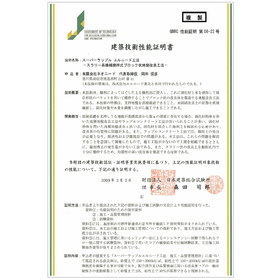
Super Rappu Elneed Method for Data Centers
Directly verify the supporting ground and achieve optimal ground improvement.
last updated
-
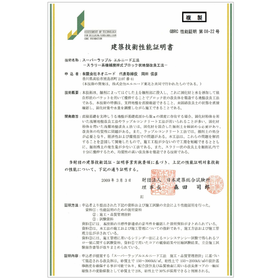
Super Rappu Elniido Method for Safety Education
[NETIS Registration] A technology that allows for direct confirmation of the supporting ground and enables construction while adjusting the amount of solidifying material and water!
last updated
-
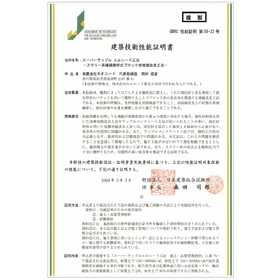
[For Factories] Super Rappuru Elneed Method
[NETIS Registration] A technology that allows for direct confirmation of the supporting ground and enables construction while adjusting the amount of solidifying material and water!
last updated
-
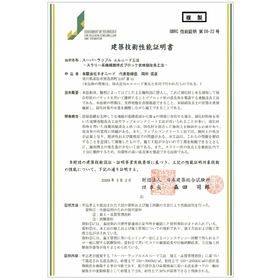
Super Rappuru Erunido Method for Public Facilities
[NETIS Registration] A technology that allows for direct confirmation of the supporting ground and enables construction while adjusting the amount of solidifying material and water!
last updated
-
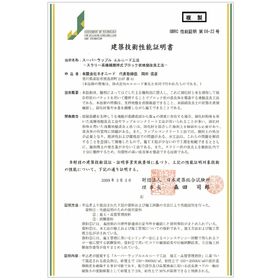
[Disaster Prevention] Super Rappuru El Nido Method Construction Technical Performance Certificate
[NETIS Registration] Improving the ground of evacuation routes to enhance safety!
last updated
-
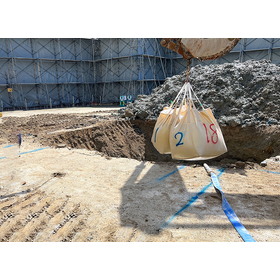
Foundation construction method that achieves overwhelming shortening of construction time for hotels.
It achieves an overwhelming reduction in construction time compared to other methods.
last updated
-
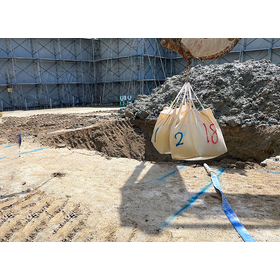
Foundation construction methods that achieve overwhelming shortening of construction periods for commercial facilities and store expansions.
It achieves an overwhelming reduction in construction time compared to other methods.
last updated
-
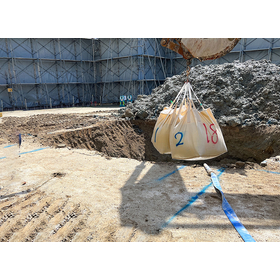
Foundation methods that achieve overwhelming construction period shortening for school building projects.
Achieved overwhelming reduction in construction time compared to other methods.
last updated
-
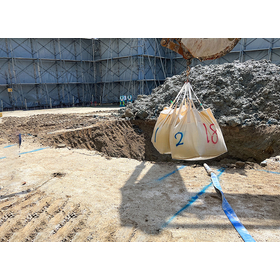
Foundation method that achieves overwhelming shortening of construction time for hospital expansion.
Achieved overwhelming reduction in construction time compared to other methods.
last updated
-
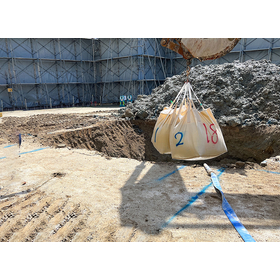
Achieving overwhelming reduction in construction time for base station installation.
Comparison of construction methods and processes / The reason for the overwhelmingly fast construction time
last updated