
news list
latest news
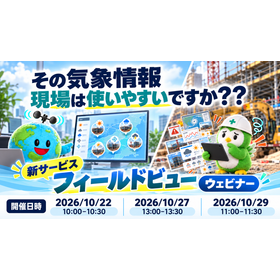
Is the weather information easy to use on-site? Introduction of the new feature, Field View.
In recent years, weather risks such as localized heavy rain, strong winds, and extreme heat that affect construction sites have been increasing. In response to this situation, more companies are intr…
1~30 item / All 66 items
-
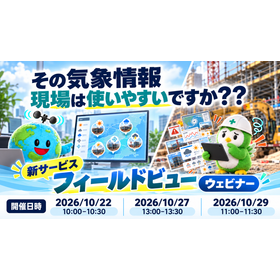
Is the weather information easy to use on-site? Introduction of the new feature, Field View.
In recent years, weather risks such as localized heavy rain, strong winds, and extreme heat that affect construction sites have been increasing. In response to this situation, more companies are adopting weather information services at the company or branch level to manage weather risks across multiple sites collectively. On the other hand, is there a challenge where "the company checks weather information, but it is not used much on-site"? To implement weather measures across the entire company, it is important not only for managers to easily grasp multiple sites but also for the personnel working on-site to be able to easily check the information necessary for their specific site. We are releasing a new feature called "Field View." For more details, please visit our website.
-
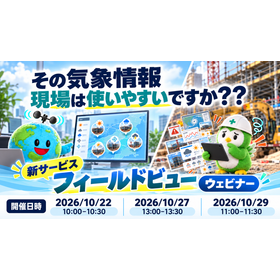
Is the weather information easy to use on-site? Introducing the new feature, Field View.
In recent years, weather risks that affect construction sites, such as localized heavy rain, strong winds, and extreme heat, have been increasing. In response to this situation, more companies are implementing weather information services at the company or branch level to manage weather risks across multiple sites collectively. On the other hand, is there a challenge where "the company checks weather information, but it is not used much on-site"? To implement weather measures across the entire company, it is important not only for managers to easily grasp multiple sites but also for the personnel working on-site to be able to easily check the information necessary for their specific site. We are releasing a new feature called "Field View." For more details, please visit our website.
-
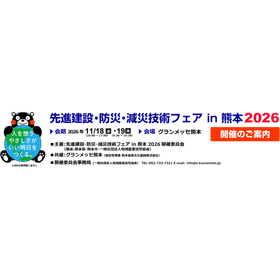
I will be presenting at the Advanced Construction, Disaster Prevention, and Mitigation Technology Fair in Kumamoto 2026.
A meteorologist from Sysmet Co., Ltd. will be presenting at the Advanced Construction, Disaster Prevention, and Mitigation Technology Fair in Kumamoto 2026. The meteorologist will take the stage for the exhibitor presentation. In disaster recovery sites where there is a risk of secondary disasters, it is crucial to share information about heavy rain and strong winds without overlooking it, as this contributes to safety measures. On the day of the event, examples of utilization in sites such as Kumamoto and the Noto Peninsula will be shared, along with explanations of how to confirm and share information that only a meteorologist can provide. Date and Time of Presentation: November 18, 2026 (Wednesday) at 11:00 AM Venue: Advanced Construction, Disaster Prevention, and Mitigation Technology Fair in Kumamoto 2026 Gran Messe Kumamoto, 1010 Fukutomi, Mashiki Town, Kamimashiki District, Kumamoto Prefecture, 861-2235 Seminar Room 3 Presentation Theme: Meteorologists explain weather measures in disaster recovery sites that should not be overlooked. For more details, please visit our website.
-
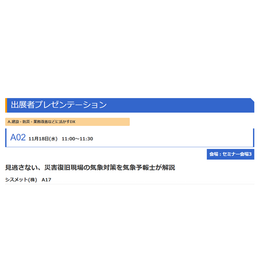
I will be presenting at the Advanced Construction, Disaster Prevention, and Mitigation Technology Fair in Kumamoto 2026.
A meteorologist from Sysmet Co., Ltd. will be presenting at the Advanced Construction, Disaster Prevention, and Mitigation Technology Fair in Kumamoto 2026. Our presentation theme is, "Don't Miss It: Meteorological Measures for Disaster Recovery Sites Explained by a Meteorologist." At disaster recovery sites where there is a risk of secondary disasters, it is crucial to not overlook information such as heavy rain and strong winds and to share it with relevant parties, as this contributes to safety measures. On the day of the event, we will explain methods for confirming and sharing information that only a meteorologist can provide, incorporating examples from sites in Kumamoto and the Noto Peninsula. Presentation Date and Time: November 18, 2026 (Wednesday) 11:00 AM onwards Venue: Advanced Construction, Disaster Prevention, and Mitigation Technology Fair in Kumamoto 2026 Grand Messe Kumamoto, 1010 Fukutomi, Mashiki Town, Kamimashiki District, Kumamoto Prefecture, 861-2235 Seminar Room 3 Additionally, on both November 18 (Wednesday) and 19 (Thursday), we will have a booth at number A17. Members of our technical department, who are responsible for field support, maintenance, and development of meteorological observation equipment, are also expected to participate. We will provide on-site introductions to handling equipment and troubleshooting from a practical perspective.
-
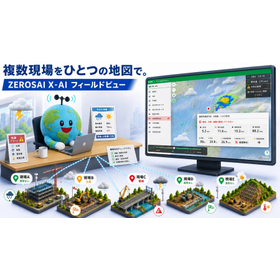
New service: Weather information for multiple civil engineering and construction sites on a single map. Developing ZEROSAI X-AI Field View.
At Sysmet Co., Ltd., we are currently developing a new feature for our comprehensive weather platform, ZEROSAI X-AI, called "ZEROSAI X-AI Field View," which allows for centralized management of multiple sites on a map. We plan to release it around October to November 2026. Until now, ZEROSAI X-AI has allowed users to check quantitative weather forecasts and observation information for each site. On the other hand, companies and branches managing multiple construction sites have expressed needs such as: "I want to check the status of each site collectively." "I want to quickly identify sites where abnormalities are occurring." "I want to reduce the effort for managers to check ZEROSAI X-AI for each site." To address these needs, we are developing the "Field View," which provides an overview of the status of multiple sites at the company or branch level. The screen currently under development is designed to display registered multiple sites on a map, allowing management from a list. For more details, please visit our website.
-
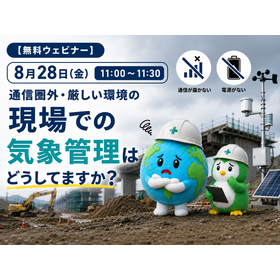
[Free Webinar] How do you manage weather conditions in areas with no communication and harsh environments?
Recommended for those who: Feel challenges in safety management and weather management at sites without radio signals or power supply. Have concerns about operating observation equipment at remote sites such as islands or mountainous areas. Have postponed the idea of weather DX at their sites, thinking "it's impossible for us." Content of the day (4 chapters / approximately 30 minutes): Why is weather countermeasure necessary now at sites without signals or power supply? (Background) [Understanding] Weather risks lurking in sites without radio signals or power supply. [Preparation] The three pillars of observation, forecasting, and notification, along with securing power and communication. [Practice] Implementation methods and case studies - operations using satellite communication and solar power, nationwide support made possible by Sysmet, and monitoring equipment operation. Chapters 1 to 3 will provide common "learning" for the sites, while Chapter 4 will introduce "how to actually do it" with specific case studies. Event Overview: Date: August 28 (Friday) 11:00 AM - 11:30 AM Format: Online (Zoom) Participation Fee: Free Chapters 1 to 3 will provide common "learning" for the sites, while Chapter 4 will introduce "how to actually do it" with specific case studies.
-
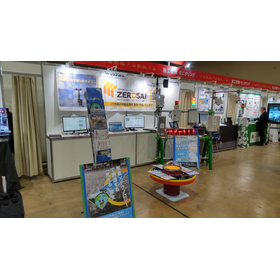
We will exhibit at the 56th Iwasaki Total Solution Fair 2026.
Sysmet Co., Ltd. will exhibit at the 56th Iwasaki Total Solution Fair 2025, which will be held on April 8 (Wednesday) and April 9 (Thursday), 2025. Exhibited Products We will showcase the comprehensive weather platform ZEROSAI X-AI, which was released on February 18. It is possible to centrally manage information observed by environmental sensors along with weather information. Environmental Sensors - Cloud-managed noise and vibration meters (actual devices available) - Cloud-managed turbidity and pH meters - Cloud-managed dust meters We also offer a variety of options, including: - Sites without radio waves or power supply - Use cases in rivers - Automatic notifications via direct messaging or LINE WORKS We look forward to meeting everyone.
-
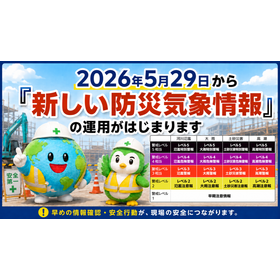
The operation of "New Disaster Prevention Weather Information" will begin on Friday, May 29, 2026.
According to the Japan Meteorological Agency, the operation of the "New Disaster Prevention Weather Information" will begin on Friday, May 29, 2026. The new disaster prevention weather information will organize four types of disasters—river flooding, heavy rain, landslides, and storm surges—into five levels of alert (1 to 5) and standardize the names to clarify the criteria for evacuation decisions. Regarding the timing of the switch, the Japan Meteorological Agency will carry out the transition work starting at 1 PM on Thursday, May 28, the day before the operation begins. If any issues arise, they will revert to the previous specifications and conduct the transition work at a later date. The services provided by Sysmet Co., Ltd. will also respond to the new disaster prevention weather information, but depending on the progress of the Japan Meteorological Agency's system transition, there may be a possibility of delays in updating our services. This article will explain how the new disaster prevention weather information will change. 1. Current issues with disaster prevention weather information 2. How the new disaster prevention weather information will change 3. Timing of the switch 4. Are you able to share information about disaster prevention weather information? For more details, please visit our website.
-

What is the "utilization coefficient" used in port construction for those involved in marine construction?
Thank you for always watching. This time, I will talk about important indicators used in port operations. Depending on the site environment, offshore construction is easily affected by waves and wind, and it is particularly necessary to carefully consider weather conditions in cost management and labor management. For this reason, there is an important keyword in offshore construction known as "utilization coefficient." This time, we will take a rough look at this "utilization coefficient." 1. What does "utilization" mean? 2. Calculation of the utilization coefficient 3. Concept of the utilization coefficient 1. What does "utilization" mean? First, "utilization" refers to the state in which machinery and equipment have been delivered to the construction site. The number of days from when the equipment is delivered to when it is removed is called "utilization days." Additionally, the construction period (excluding preparation and cleanup) includes not only the days when work is performed (operating days) but also non-operating days (holidays, safety training days, days of inclement weather, etc.). The remaining days in a year (365 days) after excluding these non-operating days constitute the annual "operating days" for the machinery and equipment. *For more details, please visit our website or feel free to contact us.
-

The disaster prevention board has integrated with LINEWORKS, direct, Wowtalk, and Microsoft Teams.
The disaster prevention system 【ZEROSAI】 has implemented a notification function integration with the 【Disaster Prevention Board】 and various business chats. Please utilize it for information sharing during disasters, safety measures on-site, creative ideas, and technical proposals! The business chats that have been integrated are as follows: LINEWORKS direct Wowtalk Microsoft Teams Previously, notifications were only sent via email when weather information exceeded threshold values, but now notifications will also be sent through your business chat to prevent information leaks. Information from the integrated Disaster Prevention Board includes: 1. Exceeding forecast threshold values - 1-hour rainfall, continuous rainfall - Average wind speed, thunderclouds - Above set temperature, below set temperature, heatstroke index 2. Exceeding observation threshold values - 1-hour rainfall, continuous rainfall - Average wind speed, maximum instantaneous wind speed - Above set temperature, below set temperature 3. Warnings, alerts, and special warnings - Special warnings (storm, heavy rain, blizzard, heavy snow) - Alerts (storm, heavy rain, flood, blizzard, heavy snow) - Warnings (heavy rain, heavy snow, snowstorm, thunder, strong winds, flood)
-
The comprehensive meteorological platform ZEROSAI X-AI has been registered in NETIS!
The weather comprehensive platform ZEROSAI X-AI has been registered in the New Technology Information System (NETIS) operated by the Ministry of Land, Infrastructure, Transport and Tourism. Registration date: May 20, 2026 Technology name: Weather Comprehensive Platform ZEROSAI X-AI NETIS number: QS-260002-A The weather comprehensive platform ZEROSAI X-AI with NETIS registration number QS-260002-A can be utilized for weather measures in the construction industry, such as civil engineering and building construction, by centrally managing AI weather forecasting, observation, and reporting. For more details, please visit our website.
-
Regarding the response to new disaster prevention weather information.
Starting from Friday, May 29, 2026, there will be changes to the warnings and alerts provided in the services offered by Sysmet Corporation due to the implementation of the "New Disaster Prevention Weather Information." For more information about the new disaster prevention weather information, please see the following article: https://product.sysmet.jp/contents/kishou/k_331 For further details, please visit our website.
-
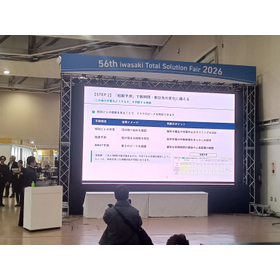
The 56th Iwasaki Total Solution Fair 2026 has successfully concluded.
The booth exhibition of Sysmet Co., Ltd. at the 56th Iwasaki Total Solution Fair 2026, held on April 8 (Wednesday) and April 9 (Thursday), has successfully concluded. On the day of the event, members of the technical department involved in meteorological forecasting, equipment development, and fieldwork from our headquarters in Kitakyushu participated to support the booth, which included actual equipment. Many visitors came to the booth, where they asked questions to the meteorologists and inquired about new services such as environmental sensors for noise and vibration, resulting in a great response. On the 8th, we were honored to have the opportunity to give a presentation on "How to View Meteorological Data from a Forecaster's Perspective and an Introduction to AI Wind Forecasting" at the mini stage, led by our meteorologists. Moving forward, we will continue to provide services that contribute to everyone's safety and efficiency, focusing on the theme of "Visible" safety created through the combination of meteorology and technology.
-
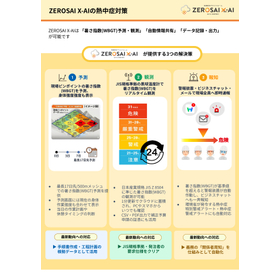
We have released the ZEROSAI X-AI Heat Stroke Prevention Collection for civil engineering and construction.
From June 2025, measures against heat stroke in the workplace have become mandatory. Additionally, in December 2026, a "Support Package for Heat Wave Measures in Construction Work" was formulated, making heat stroke prevention during the summer a pressing issue, especially for those engaged in the construction industry. This time, we provide a collection of heat stroke prevention materials that can be utilized through Sysmet Co., Ltd.'s comprehensive weather platform, ZEROSAI X-AI. Examples of heat stroke prevention measures possible with ZEROSAI X-AI: - Cloud management of heat stroke information - Forecasting of the heat index (WBGT) tailored to the site with a mesh of 500m for up to 17 days ahead - Observation of the heat index (WBGT) in compliance with JIS standards using a black globe thermometer - Alerts for exceeding work standard values for the heat index (WBGT) via electronic bulletin boards, emails, and business chat tools like direct LINE WORKS We hope this will be useful at your sites as well.
-

[Weather Helpful Information] What is Precipitation Intensity? A dedicated meteorologist from Sysmet Co., Ltd. will provide easy-to-understand explanations of weather-related terms and the characteristics of weather by season!
Thank you for always watching. This time, I will introduce one of the indicators for understanding the intensity of rain, known as precipitation intensity. Table of Contents 1. What is precipitation intensity? 2. Observation of rain and snow using weather radar 3. Image of precipitation intensity 4. Conclusion ■1. What is precipitation intensity? In the weather forecasts we usually see, the observed and predicted values of rain are often indicated by terms such as "rainfall (hourly rainfall)" and "continuous rainfall." The Japan Meteorological Agency further categorizes hourly rainfall into forecast terms such as "heavy rain" and "intense rain." *For more details, please visit our website or feel free to contact us.
-

[ZEROSAI Case Study] Civil Engineering Projects with Communication Issues Managed by Cloud-based Weather Information via Starlink
Introducing case studies of the implementation of the Natural Disaster Prevention System ZEROSAI (Registration Number QS-150021-VE) in civil engineering and construction work in the construction industry. It can be utilized not only for safety measures but also for creative ideas and technical proposals. [Before Implementation] Due to construction in mountainous areas, there was no signal, and weather information was being observed from a location far from the site. <Challenges> ● There was a discrepancy in weather information between the site and the observation point. ● Instructions to halt work for the site workers were delayed. We implemented our [Natural Disaster Prevention System ZEROSAI] and conducted communication using [Starlink]. *For more details, please visit our website or feel free to contact us.
-

[Weather Useful Information] What is "Weather Risk Settlement Type Trial Construction"?
Thank you for always watching. This time, I would like to pick up on one of the new trends being promoted by the government regarding marine construction: "Weather Risk Settlement Type Construction." I would like to explain the overview of "Weather Risk Settlement Type Construction" in as easy-to-understand terms as possible for those who are not very familiar with it. *It is recommended to read this after viewing the previous article, "What is the 'Utilization Coefficient' Used in Port Construction?" The content organized by our company is based on information as of October 2024. For details, please refer to the website of the Ministry of Land, Infrastructure, Transport and Tourism. Table of Contents 1. What is "Weather Risk Settlement Type Construction"? 2. The Concept of Weather Risk Settlement Type Construction 3. Conclusion ■ 1. What is "Weather Risk Settlement Type Trial Construction"? "Weather Risk Settlement Type Trial Construction" is one of the measures promoted by the Ministry of Land, Infrastructure, Transport and Tourism to advance work style reform in ports. *For more details, please visit our website or feel free to contact us.
-

Let's post the ZEROSAI and Compass PLUS login information poster at the workplace! Sharing weather and oceanographic information within the workplace!
Thank you very much for always using our products. We have created a "Login Promotion Poster" that contains the login information to help you make the most of our products, the "Natural Disaster Prevention System ZEROSAI" and the "Weather and Ocean Comprehensive Portal Site Compass PLUS." *For more details, please visit our website or feel free to contact us.
-

[Weather Helpful Information] What kind of wind is an average wind speed of 10 m/s for construction work suspension criteria?
This time, I would like to explain the criteria for stopping work with cranes, specifically the "average wind speed of 10 m/s," including how the wind blows and what kind of effects it may have, as well as touching on the differences between average wind speed, instantaneous wind speed, and maximum wind speed. 1. What does "average wind speed of 10 m/s" mean? 2. What are the differences between "average wind speed," "instantaneous wind speed," and "maximum wind speed"? 3. Conclusion 1. What does "average wind speed of 10 m/s" mean? The wind can vary in strength and is influenced by terrain and nearby structures. According to the Japan Meteorological Agency, an "average wind speed of 10 m/s" is described in forecasting terms as "a somewhat strong wind." *For more details, please visit our website or feel free to contact us.
-

Utilization of Starlink in areas without communication 【Disaster Prevention System ZEROSAI】NETIS Registration Number QS-150021-VE
The disaster prevention system ZEROSAI, registered under NETIS number QS-150021-VE, can perform wireless communication using SpaceX's Starlink even in communication dead zones. ZEROSAI can be utilized at sites where radio waves do not reach, such as sediment control dam construction sites and solar power generation facilities. The arrangement of Starlink equipment related to communication will be handled by Sysmet Co., Ltd., so customers will not have to deal with any hassle.
-

What kind of rain is "precipitation of 50 mm or more in one occurrence," used as a standard for work stoppage, as supervised by the meteorologist of Sysmet Co., Ltd. for civil engineering and construction supervisors?
Thank you for always watching. I will continue to introduce the criteria discussed previously regarding "standards for work suspension due to bad weather." This time, the content is about the criteria for heavy rain. This time, I will explain the concept of precipitation for considering work suspension criteria. Table of Contents 1. One-hour rainfall and continuous rainfall 2. One-hour rainfall and rain intensity 3. What kind of rain is "continuous rainfall of 50mm"? 4. Timing for resetting continuous rainfall 5. Conclusion *For more details, please visit our website or feel free to contact us.
-

From June 1st, measures against heat stroke in the workplace will be mandatory! Are you prepared?
In light of the recent increase in heatstroke-related fatalities due to extreme heat, the Ministry of Health, Labour and Welfare has announced that it will amend the Occupational Safety and Health Regulations, which will take effect on June 1, 2025. This article provides a brief overview of "what measures will be necessary." Table of Contents 1. The Importance of Initial Response 2. Measures to be Taken by Employers (1) Establishment of a System (2) Creation of Implementation Procedures (3) Awareness Raising Among Stakeholders 3. Efficient Heatstroke Measures Using Chat Tools and Centralized Management Tools *For more details, please visit our website or feel free to contact us.
-

[Weather Useful Information] Can satellite images show the strength of cold air above? What is "offshore distance"? Supervised by Sysmet Co., Ltd. Weather Forecaster.
Thank you for always watching. The last weather-related information for 2024 will introduce a theme unique to winter. As December has arrived, the temperature has dropped significantly. During this time, the term "cold air aloft" is often heard in weather forecasts. The phenomena of cold air aloft and clouds observed by the Himawari weather satellite can be viewed as images on the Japan Meteorological Agency's website. In fact, those images contain indicators that suggest the strength of the cold air aloft, in addition to the movement and shape of the clouds. This is referred to as "offshore distance." This time, I would like to introduce this "offshore distance." It may sound like a difficult term that is not very familiar, but it can actually be easily checked. Table of Contents 1. What is offshore distance? 2. Offshore distance and the strength of cold air aloft 3. Conclusion *For more details, please visit our website or feel free to contact us.
-
[For Civil Engineering and Construction Supervisors] Setting Standards for Work Suspension Due to Bad Weather on Construction Sites
In the construction industry, "bad weather" such as heavy rain and typhoons is one of the threats that jeopardizes the safety of workers and the work plan at the site. According to the Labor Safety and Health Act, (Prohibition of Work During Bad Weather) Article 522 When a business operator conducts work at a height of 2 meters or more, if there is a forecast of danger due to bad weather such as strong winds, heavy rain, or heavy snow, they must not engage workers in that work. However, even though "bad weather" can be described in one word, perceptions of it vary from person to person. Therefore, site supervisors need to establish specific numerical values or indicators to define what constitutes "bad weather" and set criteria for halting work, ensuring that all parties involved have the same understanding. So, how should these criteria be established? Table of Contents 1. What is the specific definition of "bad weather"? 2. Examples of work affected by rain and strong winds 3. Considerations for setting work stoppage criteria 4. Let's understand the weather information at the work site! *For more details, please visit our website or feel free to contact us.
-

Black Ball Heat Stress Index Meter, compliant with Japanese Industrial Standard JIS Z 8504.
Due to the mandatory implementation of heatstroke prevention measures in the workplace, we have seen an increase in inquiries regarding heatstroke at our company. Among these, we have received many requests to "measure the heat index (WBGT) in accordance with JIS standards." To conclude, the observation of the heat index (WBGT) in accordance with the Japanese Industrial Standards JIS Z 8504 can be achieved by utilizing the black globe thermometer from the Natural Disaster Prevention System ZEROSAI. - Real-time heat index (WBGT) management in the cloud, combined with pinpoint weather forecasting - Notifications via electronic display boards and business chat (LINEWORKS, direct, Wowtalk, Microsoft Teams) when threshold values are exceeded - Centralized management of various observation equipment information such as wind speed, rainfall, water level, noise, and vibration - API integration available *For more details, please visit our website or feel free to contact us.
-
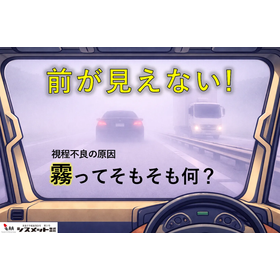
Weather Helpful Information: Can't See Ahead! Causes of Poor Visibility: What is Fog Anyway?
Have you ever experienced waking up to a completely white view outside your window due to fog? When fog appears, it becomes difficult to see while driving, increasing the risk of accidents. It can also lead to flight cancellations and work stoppages at ports. Let’s take a clear look at fog, which may seem familiar yet is surprisingly not well understood. Table of Contents 1. What is fog? – What kind of phenomenon is it? 2. Differences in names based on fog density 3. Types of fog – Five ways it forms 4. Cautions to take when fog appears! 5. Summary For more details, please visit our website.
-
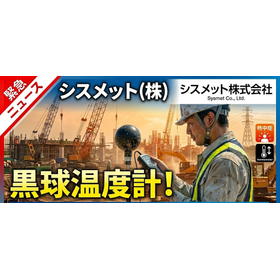
Start of provision for civil engineering and construction black globe thermometer compliant with JIS standards for Wet Bulb Globe Temperature (WBGT) observation.
To combat heatstroke during the summer, Sysmet Co., Ltd. has started providing black globe thermometers again this year. Differences from conventional black globe thermometers: - 17-day ahead heat index (WBGT) forecast with a 500m mesh - 1-minute updates of heat index (WBGT) measurements compliant with JIS standards - Email alerts when threshold values are exceeded, along with alarm devices (electronic display boards, rotating lights) and notifications via direct LINE WORKS, etc.
-
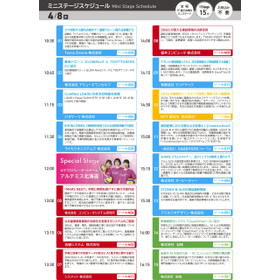
Meteorologist from Sysmet Co., Ltd. takes the stage at the Iwasaki Total Solution Fair 2026.
A meteorologist from Sysmet Co., Ltd. will be speaking at the mini stage of the 56th Iwasaki Total Solution Fair 2026. The mini stage will be held on the 1st floor of the exhibition hall, with each session lasting about 15 minutes. No prior registration is required, and attendees can enter and exit freely. Our presentation theme is: "Introduction to Weather Data from a Meteorologist's Perspective and AI Wind Forecasting." We will introduce how to interpret weather data from ZEROSAI X-AI, as well as our unique AI approach to wind forecasting and key points for applying it to on-site risk management and work planning. Presentation Date and Time: April 8, 2026 (Wednesday) from 13:30 Venue: 56th Iwasaki Total Solution Fair 2026 Mini Stage in the 1st Floor Exhibition Hall If you plan to attend the exhibition, please feel free to stop by the mini stage. We sincerely look forward to your visit. For more details about the mini stage, please visit the official website of the Iwasaki Total Solution Fair 2026. Related Article: We will be exhibiting at the 56th Iwasaki Total Solution Fair 2026.
-
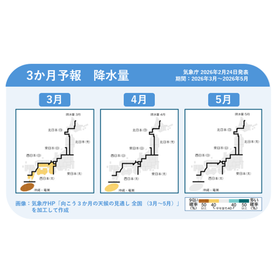
Three-Month Forecast Announcement: Spring is Expected to Have Higher Temperatures, a Season of Snowmelt Progress.
On February 24 (Tuesday), the Japan Meteorological Agency announced its three-month forecast for March to May. In the vicinity of Japan, the upper-level westerlies are expected to flow more to the north than usual, making it likely to be covered by warm air. As a result, above-average temperatures are predicted for March and April in regions excluding Okinawa and Amami, and nationwide in May. With an increase in warm days, there may also be days when it feels hot enough to sweat during the daytime. On sunny days, ultraviolet rays are likely to be strong, so please take precautions such as wearing hats and using sunscreen. For more details, please visit our website.
-
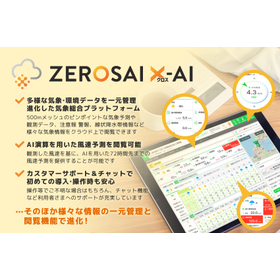
We have released a new product: the comprehensive weather platform ZEROSAI X-AI.
In recent years, extreme weather phenomena such as localized heavy rains caused by linear precipitation zones, unpredictable gusts of wind, and record-breaking heatwaves have been increasing. To ensure safety on-site, there is a demand for more accurate weather forecasts and swift decision-making. There are three main reasons why weather risk management is difficult at construction sites and factories: 1. Information is dispersed. Weather forecasts, wind speeds, heatstroke indices, rainfall... necessary information is spread across multiple systems and apps, making comprehensive decision-making time-consuming. 2. Information sharing is challenging. Only a few people are aware of the weather information, and it does not reach cooperating companies or on-site workers, making it difficult for everyone to have the same understanding in emergencies. 3. Localized forecasting is difficult. General weather forecasts target broad areas, and there are limitations to precise predictions at specific construction sites. This is especially true in mountainous or coastal areas. For future weather measures, "centralized management" and "visualization" will be key. Sysmet Corporation released the comprehensive weather platform ZEROSAI X-AI on February 18, 2026, to address these challenges. For more details, please visit our website or download the PDF.