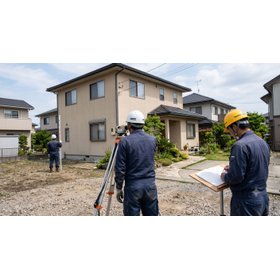
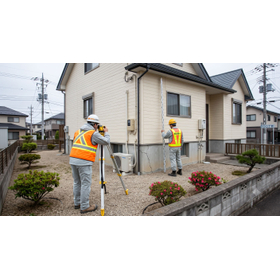
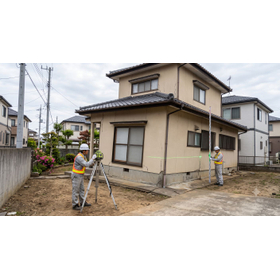
Ground reinforcement work Pure Pile method [Performance certification method]
Pure pile method that exhibits stable high strength unaffected by soil conditions.
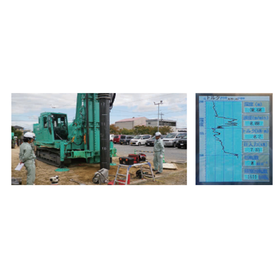
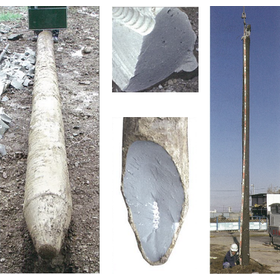
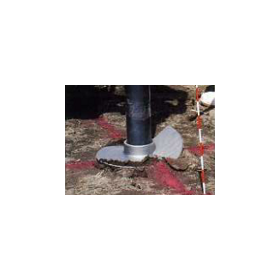
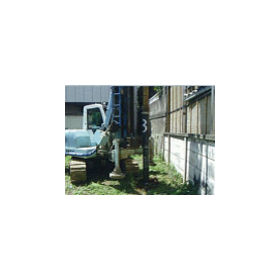
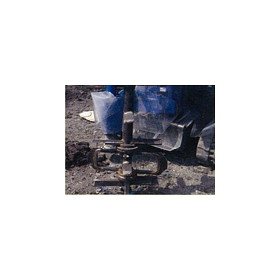
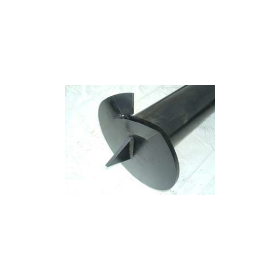
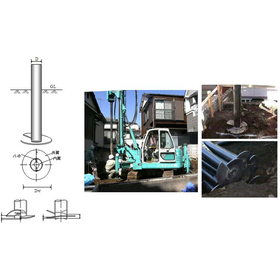
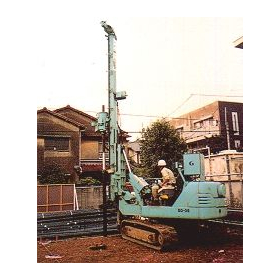
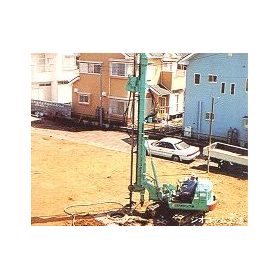
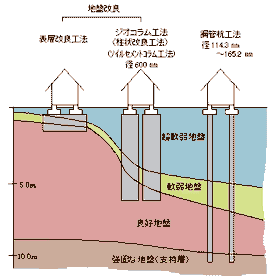
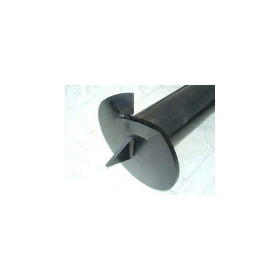
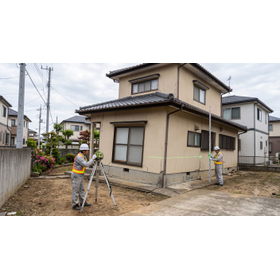
This is a reliable and secure method for reinforcing the ground with pile-like structures for single-family homes, which solidifies cement milk directly underground into pile shapes, demonstrating high quality and strength regardless of soil type. Using a drilling rod equipped with a conical excavation head, it advances to the support depth while laterally expanding the original ground and fills it with cement milk, creating high-quality pile-like columns. The greatest advantage is that the quality of the columns is not affected at all by the soil type, as the cement milk is not mixed with the local soil. By adopting a conical head, the risk of mixing excavated soil clumps is eliminated, and the construction principle that does not loosen the ground ensures stable and significant vertical bearing capacity.
basic information
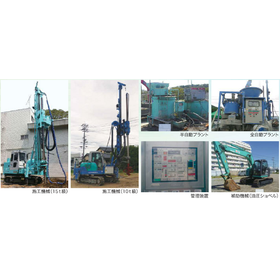
This is a reliable specification backed by the Architectural Technical Performance Certification (GBRC Performance Certification No. 11-28 Rev. 4) from the Japan Architectural Comprehensive Testing Institute, a general incorporated foundation. The design allowable bearing capacity is calculated as long-term Ra = 1/3·Ru and short-term Ra = 2/3·Ru, based on the strength index derived from SWS test results and calculated using various formulas for sandy and clayey ground. The maximum construction depth is specified as 10m from the construction ground surface, with a design diameter of 0.2m and a tip cross-sectional area of 0.0314m². PP powder is added to the cement milk to minimize bleeding. In addition to straight rods, spiral rods are available to accommodate hard gravelly ground.
Price range
Delivery Time
Model number/Brand name
Pure pile method
Applications/Examples of results
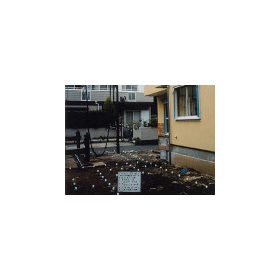
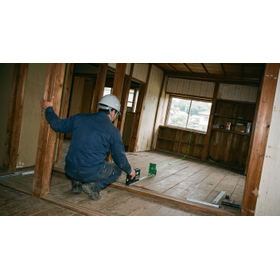
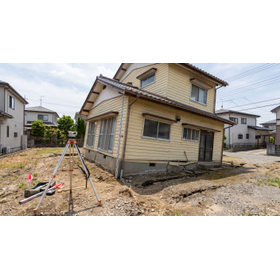
It is applicable to both sandy and clayey ground in the surrounding area and at the edge, including sites with layers of humus soil where poor solidification is a concern (the friction of humus soil is not considered). The applicable range includes single-family homes and small buildings with up to three stories, a building height of 13 meters or less, and a total floor area of 1500 square meters or less (for single-story buildings, up to 3000 square meters). A practical advantage is that when using straight rods, there is no excavation mechanism, resulting in almost no generated residual soil. Compared to conventional columnar improvement methods, it efficiently disperses and supports building loads with numerous small-diameter columns, providing high safety and enabling construction at a lower cost, thus ensuring reliable economic efficiency and peace of mind.